


Blog
If you have shopped for a home in Texas lately, you have probably encountered HOA community homes (and their accompanying HOA fees) and wondered whether these fees are a smart investment or just another line item. It is a fair question, and the honest answer is that it depends on what your community delivers in return.
Fees are not one-size-fits-all, and what you pay and what you get vary with the size of the community, its amenities, and how it is managed. So rather than asking whether the fees are worth it in the abstract, it helps to learn what they cover and how to weigh their value.
What Do HOA Fees Actually Cover?
In a standard subdivision, HOA fees often cover the basics: mowing a few shared strips of grass, maintaining an entrance sign, and keeping a small common area tidy. In a new home community, those fees typically fund a far richer set of services and shared spaces.
Depending on where you live, your homeowners association fees may go toward:
- Landscaping and upkeep of parks, greenbelts, and common areas
- Maintenance of shared infrastructure like trails, pools, and gathering spaces
- Professional community management and day-to-day administration
- Bundled amenities you would otherwise pay for separately
How fees are set matters too. In well-run communities, budgets are reviewed regularly and often overseen by a professional management partner such as FirstService Residential, which helps keep fees tied to real services rather than guesswork.
HOA Amenities: The Features Homebuyers Are Actually Paying For

A big chunk of your HOA fee usually goes toward amenities, and this is where the value becomes easy to see. Maintaining a private pool, a fitness center, pickleball courts, a community lake, and acres of trails on your own would cost far more than it does when those fees are shared across a whole neighborhood.
Common amenities funded through HOA fees include:
- Resort-style pools, splash pads, and cabanas
- Miles of walking, hiking, and biking trails
- Parks, playgrounds, orchards, and open green spaces
- Fitness centers, sport courts, and athletic fields
- Event spaces, game rooms, outdoor kitchens, and community gathering areas
Entry-level neighborhoods may offer a pool and a park, while premium new home communities add fitness facilities, event halls, and full calendars of organized events. When you compare communities, be sure to consider the added value of a community’s amenities and think about which ones you would use day-to-day.
HOA Rules and Fees: Understanding the Trade-Offs
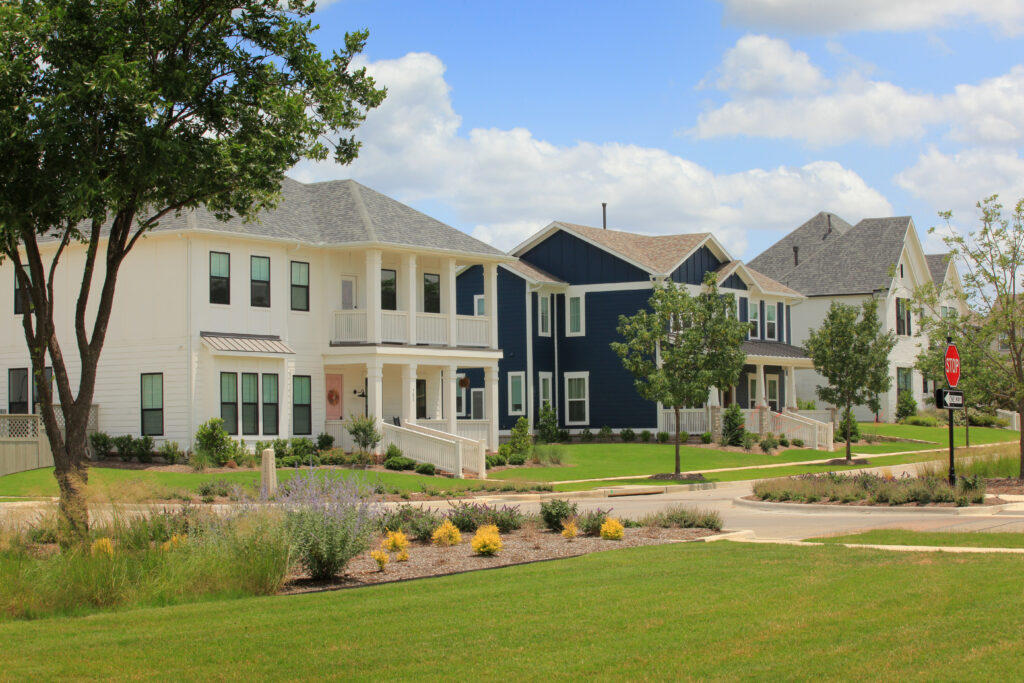
Along with fees, buying a home in an HOA community usually means you legally agree to a set of rules. The HOA enforces deed restrictions (legally binding provisions written into a property’s deed that dictate how the land may or may not be used), if any, as well as other rules established in its Covenants, Conditions, and Restrictions (CC&Rs), Architectural Guidelines, and Rules and Regulations. When you purchase a home in an HOA community, you agree to abide by these rules and grant the HOA the right to enforce them.
HOA rules commonly address things like:
- Exterior appearance and approved home colors or materials
- Landscaping and yard upkeep
- Parking and vehicle storage
- Noise and general neighborly conduct
These guidelines are the trade-off for predictability and consistent standards that help protect curb appeal and long-term property values. Enforcement usually starts with a friendly notice and follows a defined process, with a clear path to resolve disputes fairly. Before you buy, ask how the rules are enforced, how often fees change, and whether the restrictions fit your lifestyle.
HOA Fees and Home Values: What Homebuyers Should Consider
The link between HOA communities and home values is an area of active debate that varies by market. That said, new home communities are designed with long-term livability in mind, which can support resale appeal down the road.
To judge whether fees are reasonable, weigh them against everything the community provides, and review the association’s financial health before you buy, including its reserve funds and fee history. A community with healthy reserves is better prepared for big repairs without sudden special assessments.
The Broader Benefits of Living in an HOA Community

Beyond amenities, some of the biggest benefits of HOA communities are the ones you do not always see. Coordinated maintenance and shared governance take a load off individual homeowners, while consistent standards keep the whole neighborhood looking its best.
There is a social side, too. Organized events, neighborhood programs, and well-placed gathering spaces give a community its sense of place, and many new home communities are built around connectivity, with walkable access to parks, trails, and shared spaces that make everyday life easier.
This is where a developer’s philosophy really shows. Hillwood Communities has been creating places to call home since 1988: more than 38 years of placemaking guided by a long-term, people-first approach.
FAQs on HOA Fees

What do HOA fees actually cover in a new home community?
HOA fees in a new home community typically cover the maintenance of shared amenities like parks, trails, and pools, along with the upkeep of common areas and entrances. Fees often also support lifestyle programming, such as resident events and community activities, that help bring neighbors together and add value to everyday life in the community.
How much are average HOA fees in a planned community?
HOA fees in a new home community vary depending on the amenities and lifestyle programming offered, so they’re best confirmed directly with the specific community you’re considering. Generally, fees reflect what’s included, like parks, trails, pools, and resident events, so communities with more robust amenities tend to have correspondingly higher fees.
What are the benefits of living in an HOA community?
Living in an HOA community means access to shared amenities like parks, trails, and pools, plus a consistently well-maintained neighborhood that helps preserve home values over time. Many homeowners also appreciate the lifestyle programming and sense of community these neighborhoods offer, from resident events to organized activities that help neighbors connect.
Are HOA fees worth it compared to non-HOA neighborhoods?
HOA fees are often well worth it for homeowners who want a community with well-maintained amenities and a consistent, cared-for look throughout the neighborhood. While non-HOA neighborhoods skip the extra monthly cost, they typically don’t offer the same shared parks, trails, and lifestyle amenities that make new home communities appealing to both current residents and future buyers.
What amenities are typically included in HOA fees?
HOA fees typically cover the upkeep of shared amenities such as parks, trails, pools, and community green spaces, as well as the maintenance of common areas and entrances. In many Hillwood Communities, fees also help fund lifestyle programming and events that bring neighbors together, adding value beyond just maintenance.
How do HOA rules and fees affect home values?
HOA rules and fees play a real role in protecting and even boosting home values over time. Well-managed HOAs maintain shared amenities, common areas, and community standards that keep the neighborhood looking consistent and well-kept, which helps preserve curb appeal and buyer interest down the line. Reasonable, clearly outlined fees are often seen as a worthwhile investment, since they fund the parks, trails, and lifestyle amenities that make a new home community more attractive to future buyers.
How to Decide If an HOA Community Is Right for You

The best way to decide is to ask good questions and match the answers to your life. Before buying, request the HOA documents, budgets, and recent meeting minutes so you know what you are agreeing to. Then weigh your lifestyle priorities – whether they are family activities, outdoor access, or low-maintenance living – against the cost of the fees.
The clearest way to feel the difference is to experience it. Hillwood Communities offers new home communities across Texas, future communities on the horizon, and ready-to-build home sites available now. In the Dallas-Fort Worth area, explore Landmark, Treeline, Ramble, Harvest, Pecan Square, Union Park, and Lilyana. Near Houston, visit Pomona, Legacy, and Valencia, and in the Austin area around Georgetown, visit Wolf Ranch and Melina.
Our new construction builders have homes available, and many are offering incentives, so now is a great time to buy!