Blog
Communities with walking trails and green spaces are among the top priorities for today’s homebuyers. A recent National Association of Realtors survey found that most buyers consider sidewalks and walking trails important when deciding where to live, and most also want to live within walking distance of parks and other amenities.
That demand is reshaping how residential developments get designed, and a nature-focused community takes the idea further than most. Instead of treating green spaces as an afterthought, these communities plan trails, natural amenities, and outdoor spaces into the layout from the start. If you’re searching for a new home community built around an outdoor living lifestyle, here’s what to look for and why it matters.
What Makes a Community Nature Focused?
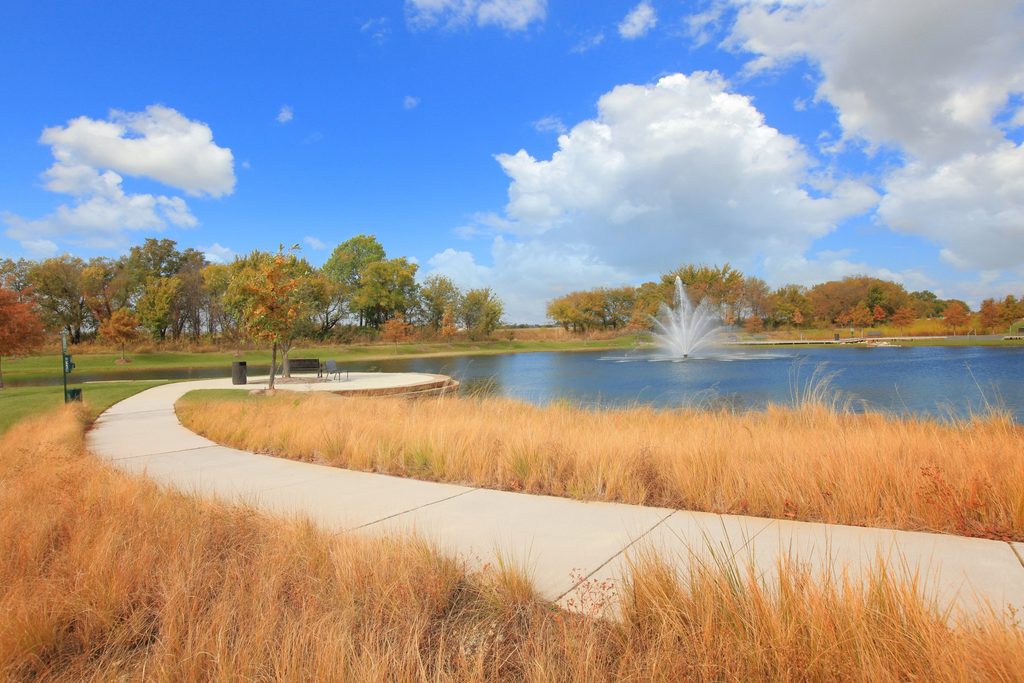
A nature-focused community starts with the land itself, before a single street is mapped or a home site is planned. Rather than clearing a site during construction, nature-based community design preserves the land’s natural elements, then works those features into recreational amenities residents can actually use. That means the pond down the street, or the stand of mature trees bordering the community’s home sites, may have been there long before construction started. With nature-based community design, mature trees and water features usually aren’t add-ons. They’re often the reason a trail or park sits where it does, and the result is a neighborhood that grew from the land instead of one dropped on top of it.
Why Homebuyers Are Drawn to an Outdoor Lifestyle Community
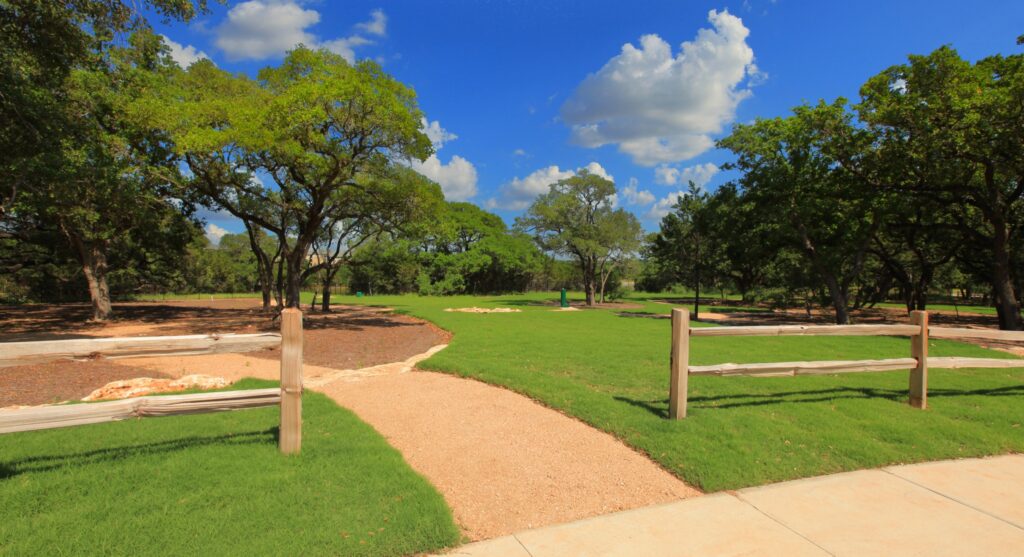
Trails and green space do more than look nice from the porch. Researchers have found that time spent around trees, water, and other natural surroundings can lower cortisol, the hormone tied to stress, along with blood pressure and pulse rate, compared to time spent in a typical city environment.
An outdoor lifestyle community also makes it easier to build movement into daily life. A walk after dinner or a bike ride on the weekend doesn’t require a scheduled trip to a gym or a park across town, since trails and natural amenities are already part of the neighborhood.
Essential Features of Nature-Focused Communities
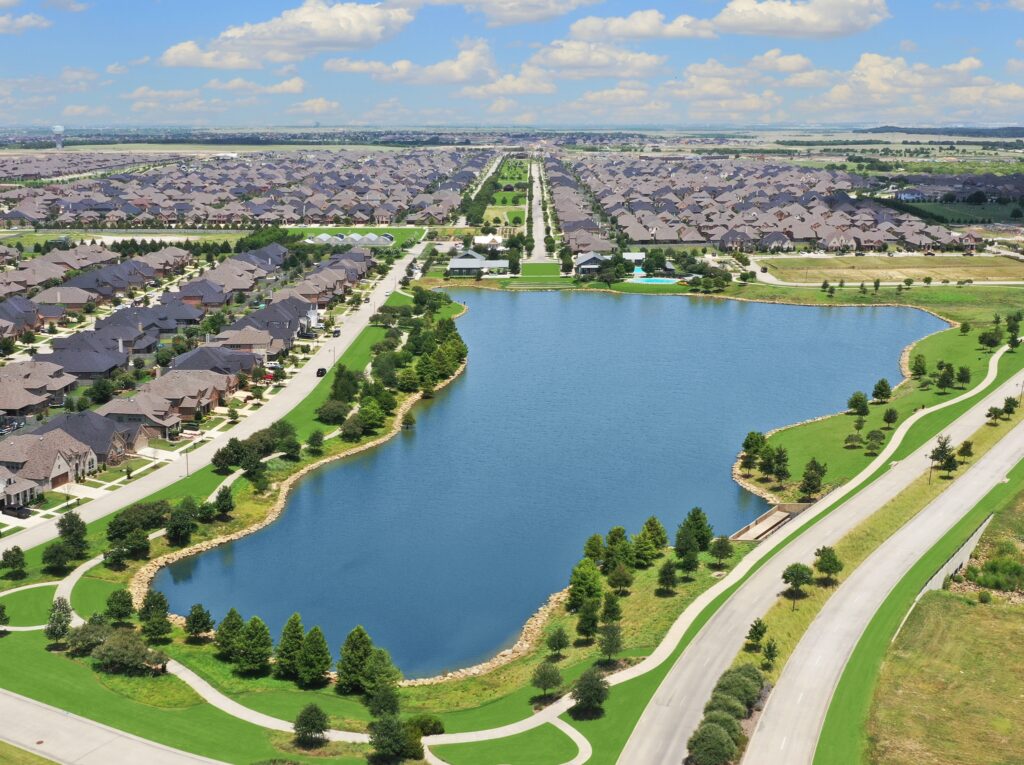
Three features come up again and again in these communities: trails, green spaces, and water. Here’s a closer look at what each one typically looks like.
Connected Trail Systems and Walking Trails
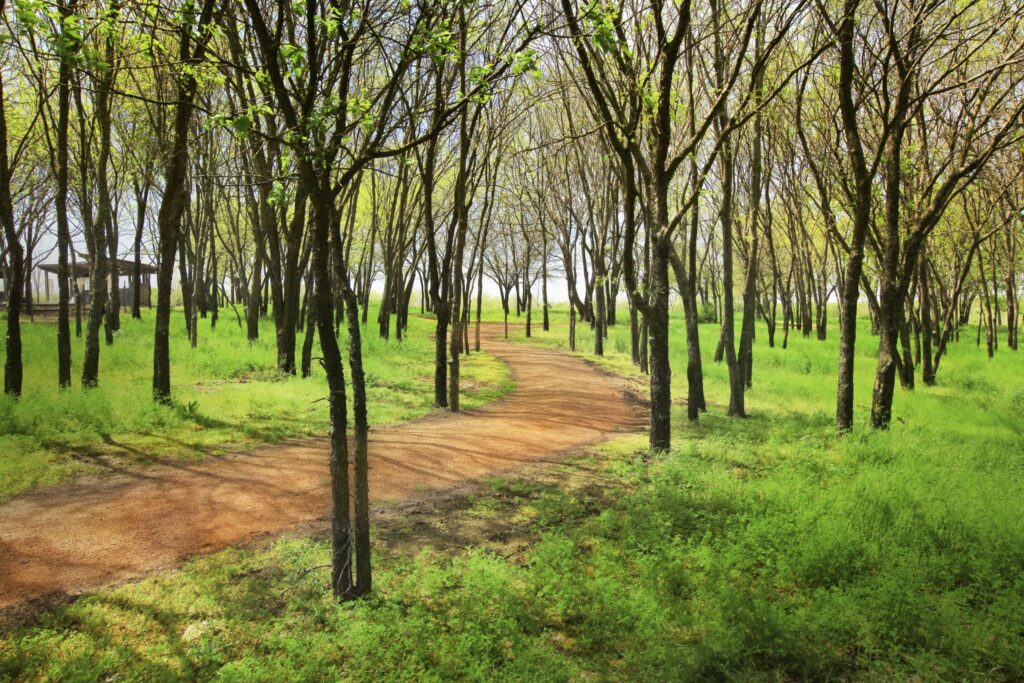
Communities with walking trails offer homeowners an easy way to get outside without leaving the neighborhood. In a nature-focused community, these trails usually connect to more than one destination, linking home sites to parks, greenbelts, the local school, and other outdoor community spaces, as well as indoor spots like the neighborhood amenity center. Many of these trails support both biking and walking. Some are paved multi-use paths, while others are natural surface trails through wooded areas, better suited to more rugged mountain biking.
In some communities, the trail system goes even further, linking up with public trail networks that extend well beyond the neighborhood and into the surrounding areas.
Natural Amenities and Preserved Open Spaces
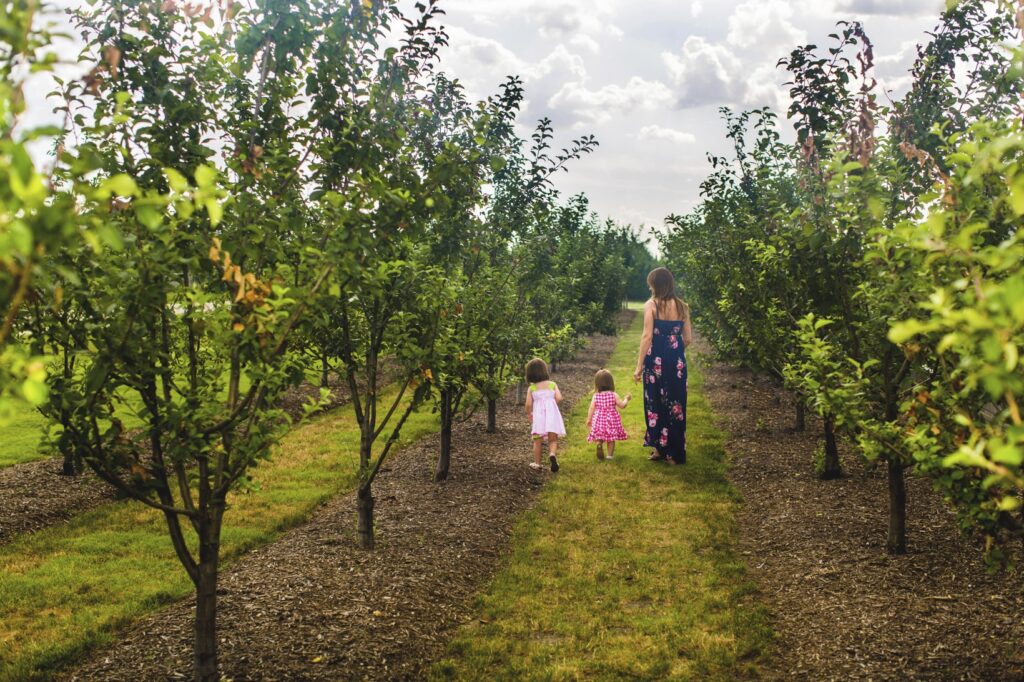
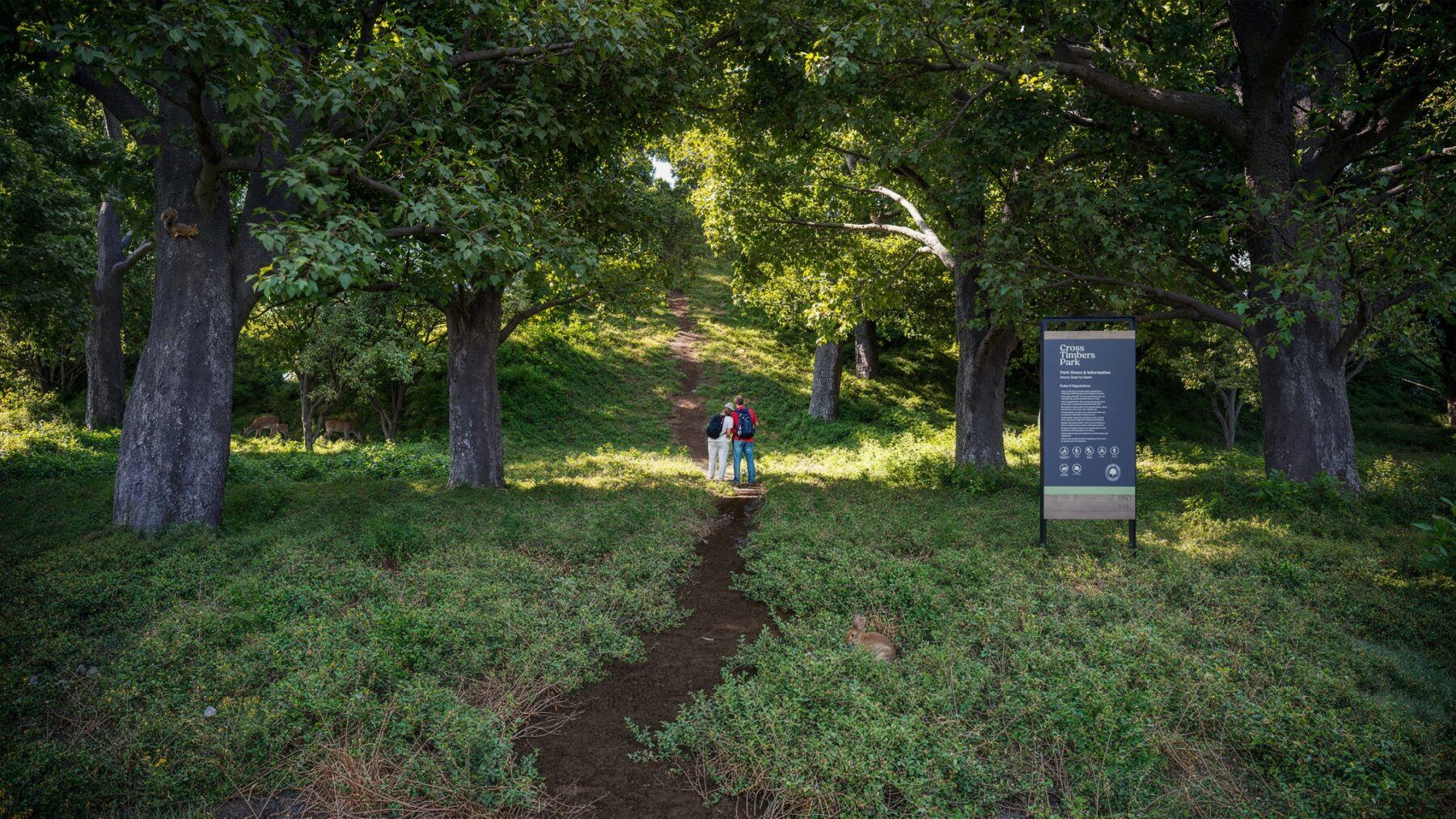
Wooded areas and preserved open spaces set these neighborhoods apart from a standard subdivision. That kind of green space gives residents room to hike, wander off the main path, and discover natural areas most subdivisions clear away, going well beyond what a playground or pool alone can offer.
Preserved natural areas can also support local wildlife, since natural habitat isn’t cleared away the way it might be in a typical subdivision. Birds, rabbits, and other small wildlife often stick around when their surroundings stay intact, so residents may occasionally spot them without leaving home. That kind of everyday contact with nature is part of what makes an outdoor living lifestyle feel different from a subdivision with a single, manicured park.
Water Features for Fishing, Paddling, and More
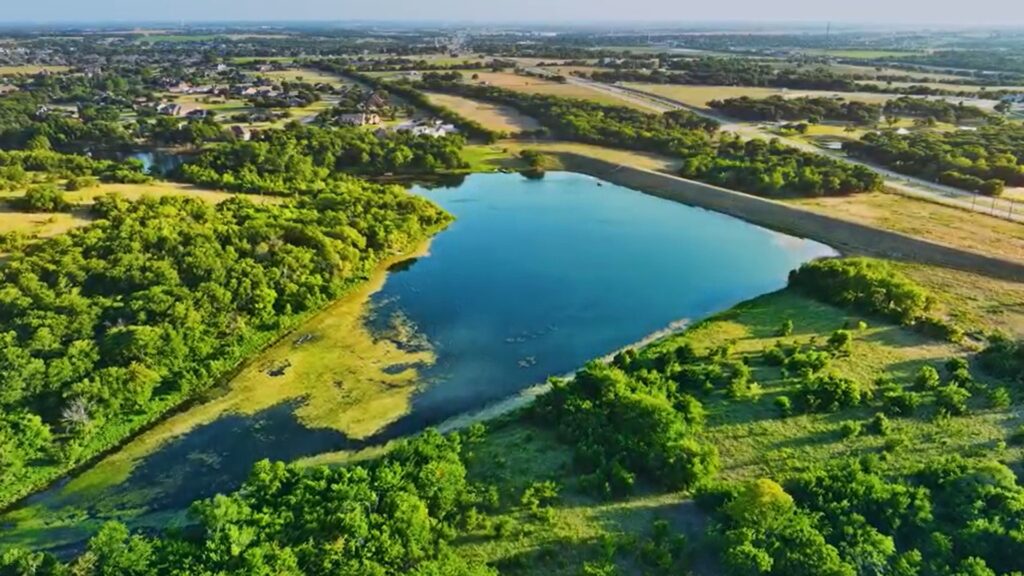
Many nature-focused communities also build their natural amenities around water. Ponds and lakes stocked for catch-and-release fishing give residents a place to cast a line close to home, while larger ones are big enough for paddleboating, kayaking, or canoeing. Some communities also preserve creeks that wind through the property, giving residents a natural feature to follow along a trail or simply enjoy from a nearby bench.
Nature-Focused Communities Across Texas
Hillwood’s nature-focused communities each take a different approach to trails, parks, and natural amenities, based on each one’s land and location.
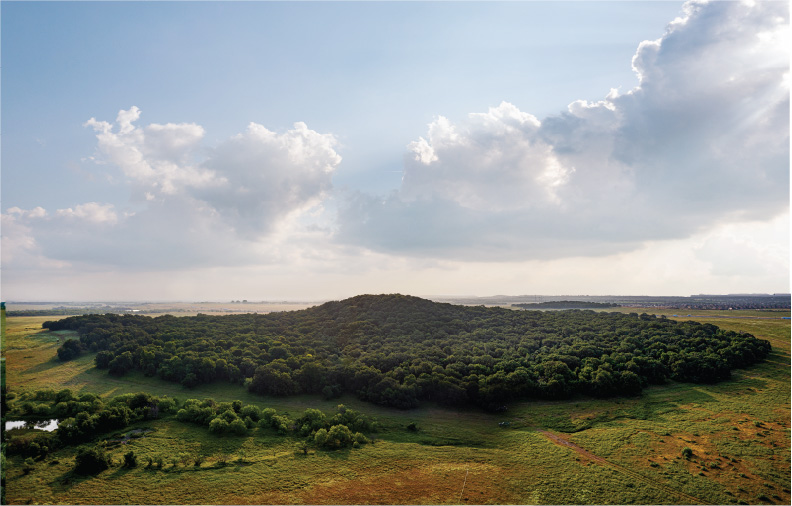
- Landmark by Hillwood in Denton preserves stretches of the Cross Timbers Forest around Pilot Knob, with 1,100 acres set aside for parks, trails, and wild spaces.
- Ramble by Hillwood in Celina is anchored by a seven-mile trailway that winds through parks, an 18-acre recreational lake, and more than 200 acres of preserved open space, connecting nearly every corner of the community.
- Treeline by Hillwood in Justin is built around a stand of mature oak trees and a meandering creek, with most amenities inspired by a tree theme, including a park designed specifically for stargazing and cloudspotting.
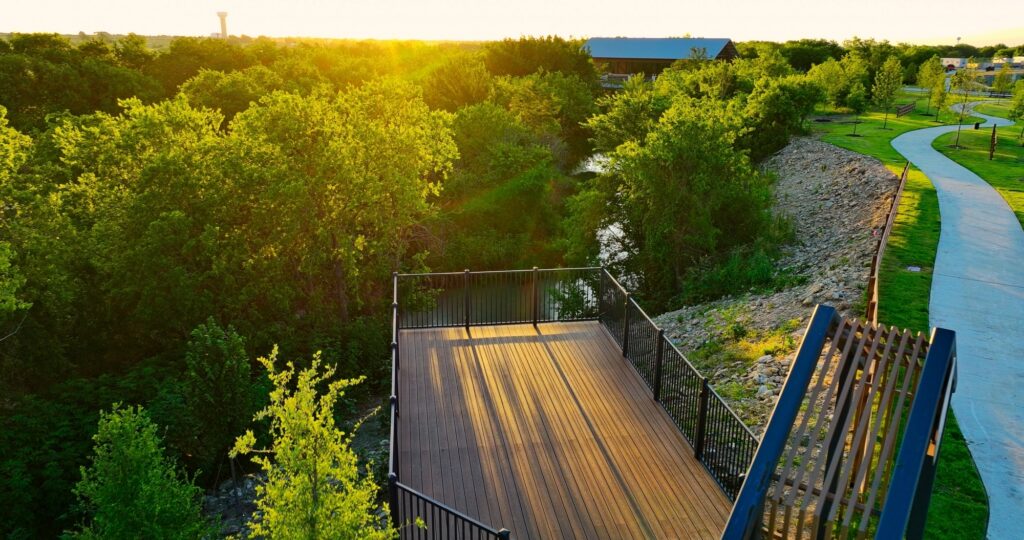
- Wolf Ranch by Hillwood in Georgetown follows the San Gabriel River, with 16 miles of active trails (and a total of 20 miles planned) winding through scenic, tree-shaded stretches near the edge of the Hill Country. Its trail system connects directly to the Georgetown Regional Trail, giving residents access to a much larger network of trails throughout the city.
- Valencia by Hillwood in Manvel draws its name and design inspiration from the orange groves once found on the land, with parks, trails, and ponds woven throughout the community.
- Legacy by Hillwood in League City is built around more than 60 acres of connected waterways where residents can fish, paddle, and spend time along the water.
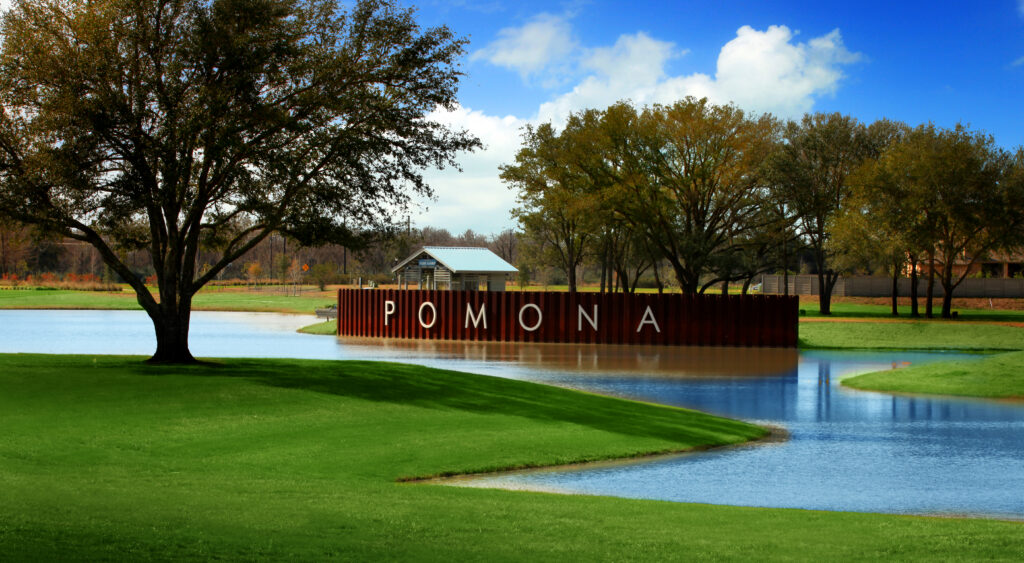
- Pomona by Hillwood in Manvel centers on a lake system with docks for paddleboards and kayaks, along with parks, trails, and green spaces woven throughout the community.
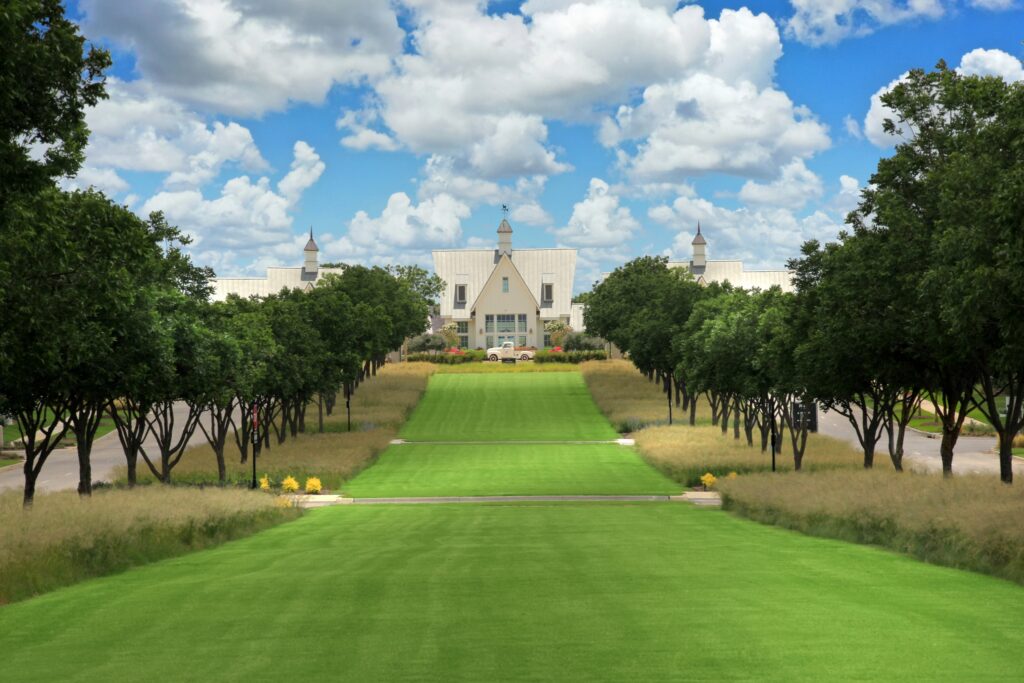
- Pecan Square by Hillwood in Northlake was built on a former horse farm, where Hillwood preserved more than 200 pecan trees found on the 1,100-acre property.
- Harvest by Hillwood in Argyle/Northlake centers on a working farm, complete with garden plots and volunteer opportunities for residents alongside trails, green spaces, parks, and fishing ponds throughout the community.
- Union Park by Hillwood in Little Elm centers on a 30-acre Central Park, with trails and tree-lined greenbelts connecting neighbors to a fishing pond and open lawns.
- Lilyana by Hillwood in Celina offers miles of walking paths, a catch-and-release fishing pond, and about 50 acres of green space spread across numerous parks throughout the community.
FAQs about Nature-Inspired Communities
What makes a community “nature-inspired”?
A nature-inspired or nature-focused community is planned around existing natural features like trees, water, and open land, offering residents a chance to live in and around these relaxing elements. The design includes trails, parks, and other outdoor community spaces from the start.
What’s the difference between a nature-focused community and a regular new home community?
The biggest difference is what residents actually get to experience. A nature-focused community offers more ways to explore and be immersed in real nature, whether that’s a wooded trail, a fishing pond, or open green space, giving residents a chance to unplug from daily life and reconnect with the land. A standard new home community may have a park or two, but it doesn’t build the same level of access to nature within the neighborhood itself.
What kind of natural amenities do these communities typically include?
Common natural amenities include ponds, wooded areas, and preserved open spaces. Many communities also include parks or gathering spaces that connect directly to a trail system.
Do nature-focused communities have hiking or walking trails?
Most do. Communities with walking trails typically include connected trail systems that link home sites to parks, greenbelts, and other natural amenities throughout the neighborhood.
Are nature-focused communities more expensive to live in?
Cost varies by community, builder, and home site, just as it does anywhere else. Rather than focusing on price alone, consider the long-term value these communities offer through outdoor access and quality of life.
Finding a Nature-Focused New Home Community in Texas
Before you decide on where to live, take a look at a community’s site plan and amenity map. They can show you how trails, green spaces, and natural amenities connect across the neighborhood, and it’s worth asking about future amenities planned for the community as well.
Hillwood Communities has spent more than 35 years planning new home communities across Texas, and each one is designed to perfectly suit the land it sits on. These award-winning nature-focused communities are located in the greater Houston area, the Dallas-Fort Worth metroplex, and suburban Austin.
If you’re searching for a new construction home near Dallas-Fort Worth, Austin or Houston, look at how each Hillwood community connects home sites to trails, parks, and open spaces.
The new construction builders in Hillwood Communities have homes available, and many are offering incentives, so now is a great time to buy! Visit the builders’ model homes to learn more.