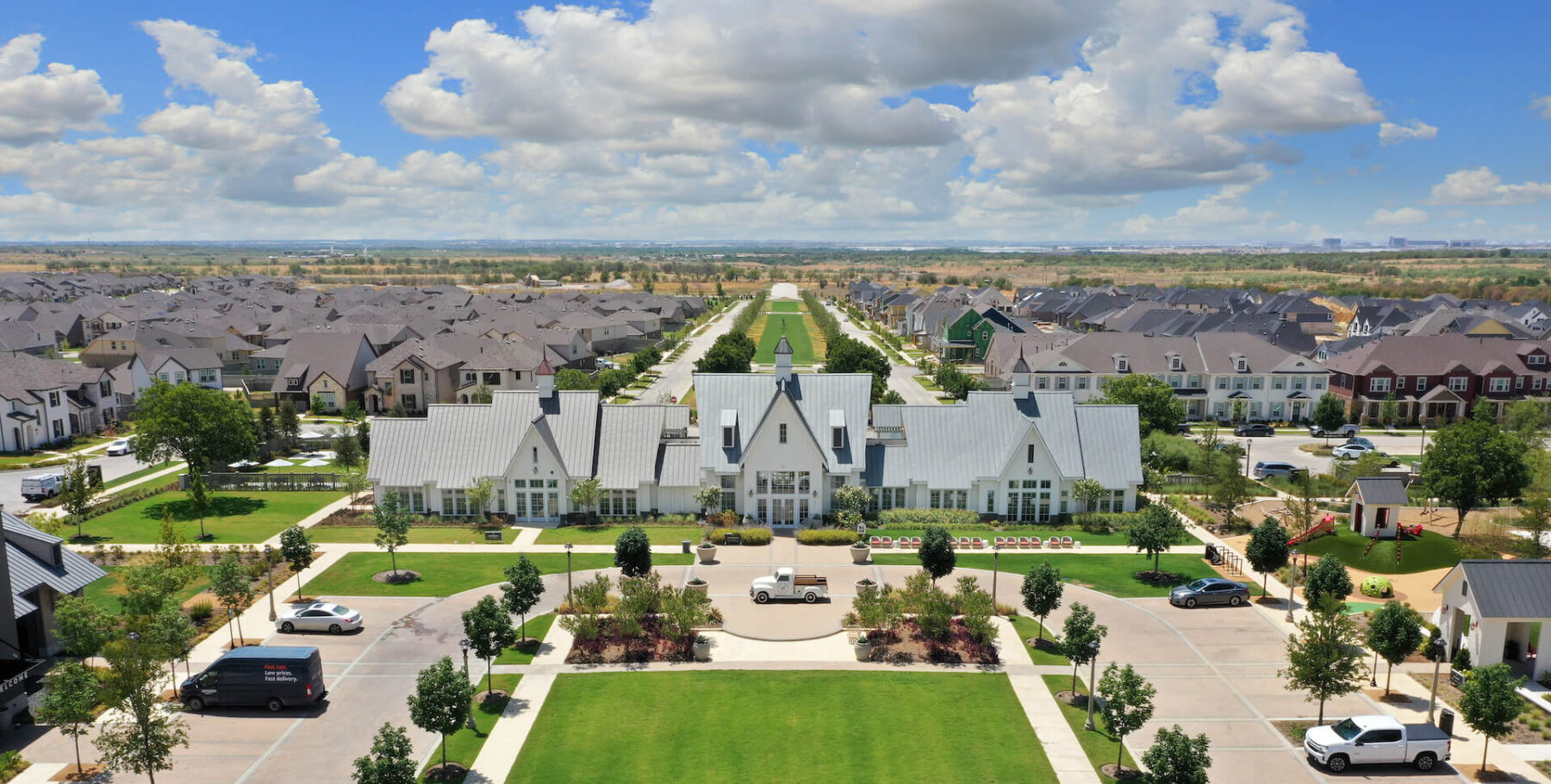
As one of the most dynamic and rapidly evolving markets in the United States, the Dallas-Fort Worth (DFW) metro area holds a significant place in both the Texas and national economies. As such, it’s often seen as a leading indicator of current housing trends, offering a glimpse into cutting-edge developments as they occur.
That said, the past few years have proven that forecasting anything with certainty in the real estate world can be a difficult task. Fluctuations in interest rates, supply, and demand have all remained volatile, making accurate predictions difficult.
Still, there are plenty of data points that offer indicators of what’s to come in the New Year. In this article, we’ll sift through the multifaceted factors shaping the DFW housing market to provide a clear and comprehensive outlook as we head into 2024.
DFW Housing Market: The Heartbeat of Texas and the Nation
The DFW housing market isn’t just a local reality; it’s also a national narrative. As a hub of economic activity for the Lone Star state and beyond, the DFW area’s real estate trends often reflect broader national shifts and play a pivotal role in shaping housing policies and economic strategies nationwide.
The region saw robust economic expansion in 2023, with continued employment growth and low unemployment, indicating a strong foundation for the housing market. Apartment demand and single-family housing permits increased, although (much like the rest of the country) multifamily permits declined due to tighter credit conditions and higher financing costs.
Key Factors Influencing the DFW Housing Market in 2024
Demographics
- Job Market and Employment Trends: The DFW area’s job market has been very robust, with total nonfarm employment increasing by 139,700 jobs during 2023. This growth took place across a wide variety of sectors, from professional and business services, to financial activities, to mining, logging, construction, and manufacturing. Nineteen corporations relocated their headquarters to North Texas in 2023, bringing thousands of jobs now with more projected in the coming years. The diversity of industries seeing growth in DFW points to a strong and multifaceted economy that is likely to continue attracting new residents and businesses through 2024.
- Population Growth and Age Trends: While the state of Texas has seen six of its cities among the nine fastest-growing cities in the South, the DFW metroplex has experienced the most significant population boom. Between 2021 and 2022 it had the highest increase in the population of any U.S. metro area, with 170k+ new residents and there are no signs this growth has slowed. These figures suggest a dynamic and expanding demographic landscape in the DFW area, a major influence on its real estate landscape.
- In-migration from Other States and Countries: The population growth across the DFW metroplex is fueled by significant in-migration from other states and countries. This influx is driven by the area’s economic opportunities, cultural amenities, and overall quality of life. The Dallas-Fort Worth area’s capacity to attract a diverse population contributes to its dynamism and resilience as an economic hub.
Economy
- Interest Rates and Mortgage Affordability: In 2023, the Federal Reserve continued its string of interest rate hikes, which subsequently impacted the housing market. Increased rates meant higher mortgages, which significantly affected affordability. Mortgage rates rose from about 3% to as high as nearly 8%, causing a slowdown in housing activity. But as the Fed halts further rate hikes in 2024, falling mortgage rates could turn the trend of decreasing home sales around.
- Inflation and Construction Costs: Inflation is also impacting the cost of construction and housing materials, which can affect housing affordability and the pace of new construction. The combination of high mortgage rates and inflation poses a challenge to the new housing market in the DFW area.
- Overall Economic Growth: Despite these challenges, the DFW area’s strong population and job growth are expected to support the still-booming regional economy. The region’s economic expansion and employment growth have been outpacing national averages, suggesting a relatively resilient local economy.
Housing Supply
- Current Levels of Inventory and New Construction: In terms of housing supply, there has been a steady increase in single-family permit issuance since spring 2023, although the year-to-date issuance as of August was down compared to the previous year. This indicates a cautious but ongoing growth in new home construction.
- Impact of Zoning Regulations and Development Costs: Zoning regulations and development costs are critical factors that can influence the supply of new homes. High construction and financing costs, as well as regulatory barriers, can limit the pace and scale of new housing developments.
- Availability of Land for Development: Another crucial factor affecting housing supply is the availability of empty land for new home development. The DFW area, being one of the busiest large U.S. metros in new construction, could face challenges ahead when it comes to finding suitable and affordable land for further development, especially as the population continues to grow.
Housing Demand
- First-time Homebuyer Trends and Preferences: In 2023, half of all homebuyers were purchasing their first home, marking a significant increase from previous years. The surge in first-time buyers is partly due to existing homeowners choosing not to sell or buy new homes, as many are locked into mortgage rates that sit well below current levels. The rise in mortgage rates has impacted first-time buyers significantly, drastically reducing their purchasing power. For instance, a buyer with a budget of $3,000 a month could afford a $429,000 home at a 7.4% mortgage rate, a notable decrease from what could have been afforded at lower rates even a year ago.
- Demand from Millennials and Other Age Groups: Millennials and other younger demographics are increasingly feeling the pressure of high housing costs. Many in this age group believe the government hasn’t done enough to make housing affordable, as evidenced by a recent study. The gap between home prices and consumer income has widened significantly, with the income required for a typical first-time buyer rising from about $70,000 in 2019 to $90,000 just three years later in 2022.
- Impact of Remote Work on Housing Choices: It’s no surprise that the rise in remote work has dramatically influenced the housing preferences of new home buyers. With the need for proximity to workplaces reduced, many remote workers are opting for homes in suburbs and rural areas, seeking larger living spaces, access to nature, and a lower cost of living. This shift is driving demand in these areas and is reflected in the types of homes being purchased and their locations.
Government Policies
- Federal Housing Policies: In 2023, the Federal Housing Finance Agency (FHFA) announced updates to Fannie Mae and Freddie Mac’s Equitable Housing Finance Plans. These updates aim to provide equitable access to affordable and sustainable housing, including actions to remove barriers for Latino renters and homeowners, support for locally-owned modular construction in communities of color, and the inclusion of rental payments and cash flow in automated underwriting systems. These initiatives are part of a broader strategy to promote fairness and accessibility across the entire housing market.
- State and Local Policies in Texas: The Texas legislature has introduced several new bills to try and address the housing affordability crisis by speeding up the construction of new homes and apartments. The proposals include allowing builders to use less land for single-family homes, easing city housing regulations, and creating a state housing tax credit to supplement the federal program. Additionally, there are proposals to set up a state fund to finance housing for middle-income workers like teachers and healthcare workers.
Predicting the DFW Housing Market in 2024: a Brighter Outlook Ahead
Entering 2024, the Dallas-Fort Worth housing market appears poised for nuanced changes. Key factors influencing this market include robust population growth, a thriving job market across a variety of diverse industry sectors, and the ongoing impact of remote work on housing preferences. However, challenges such as rising interest rates, inflation, housing supply and affordability persist, affecting both demand and supply.
For homeowners, new homebuyers, and investors navigating the DFW housing market in 2024, a strategic and informed approach is crucial. The metroplex area remains a popular destination, and thus a competitive one when it comes to buying a home. Homebuyers should be aware of the higher income requirements for purchasing homes in Dallas proper, with the median sale prices sitting at around $275,000 in 2023. Exploring surrounding suburban areas in Texas where the income necessary to afford a home is relatively lower, might offer more opportunities.
Remote work’s continued influence suggests a preference for affordable new homes in DFW that can accommodate home offices and offer a high quality of life. Dallas Fort Worth has proven to be an incredibly attractive destination for remote workers and could see sustained demand in housing developments that cater to this particular demographic.
While the outlook for 2024 is optimistic, potential homebuyers and investors should be aware that unforeseen events (e.g. natural disasters or geopolitical instability) could disrupt the housing market unexpectedly. Staying informed, flexible, and prepared will be key to successfully navigating the DFW housing market in the coming year. We always recommend consulting with a trusted Realtor throughout the homebuying process.
DFW Housing Market Forecast 2024: FAQ’s
Will Dallas home prices drop?
While predicting exact price movements is challenging, the Dallas housing market is showing signs of moderation. Prices may not significantly drop but could stabilize or increase at a much slower rate in 2024.
Are Texas home prices going down?
As of 2024, Texas home prices have experienced a slight decrease from recent highs, but not a steep drop. This trend is primarily driven by higher mortgage rates, exerting downward pressure on home sales and leading to a 5.9 percent year-over-year decline.
And while home prices are projected to fluctuate statewide depending on the region (for example, the DFW area saw sharp declines in new home pricing during 2023), the overall market remains strong. Instead of bottoming out, overall home prices are expected to rise slightly by the end of 2024.
What is the housing market forecast for Dallas in 2024?
Markets like Austin, Dallas-Fort Worth, and Houston remain hot, driven by strong job growth, population influx, and a relatively affordable cost of living compared to other major U.S. cities.
What are the hottest real estate markets in Texas?
Markets like Austin, Dallas-Fort Worth, and Houston remain hot, driven by strong job growth, population influx, and a relatively affordable cost of living compared to other major U.S. cities.
Is Texas in a buyer’s or seller’s market?
While it has been a seller’s market in recent years, Texas is currently moving towards a more balanced market. 2024 may see conditions that are much more favorable to buyers, such as increased inventory and slower price growth.
Explore Your DFW Homebuying Options in a Hillwood Community
If you’re considering a new home in Dallas-Fort Worth, Hillwood Communities offers a range of lifestyle communities. It’s an ideal time to find a new home in the thriving DFW metro area, with many builders offering attractive incentives! We encourage you to tour our communities, visit the builders’ model homes, or contact us directly for more details.
If you’re dreaming of moving to the Dallas-Fort Worth (DFW) Metroplex this year, you’re not alone. DFW continues to lead the country in population growth, with approximately 1.3 million people relocating to the area in the past decade. While additive to the local culture and economy, this influx has also led to increased demand for housing, making it challenging for some buyers to find affordable options.
Amidst the uncertainty, a series of communities have emerged that offer a level of affordability unseen elsewhere in the DFW metroplex: the “outer loop.” Read on to learn what exactly makes these neighborhoods so appealing (and which of them you should consider).
Understanding the DFW Housing Market: Factors Contributing to High Costs
The housing market in DFW is characterized by high demand, particularly for pre-owned homes in well-established suburbs and residential areas of Dallas and Fort Worth. Predictably, this demand has resulted in rising property prices, specifically within Dallas’s “inner ring,” comprising the area inside I-635. Increasing property taxes and a rise in construction costs are additional variables that contribute to the overall escalation in housing costs, both in the DFW area and nationwide.
Advantages of the Outer Loop for Affordable Housing
The term “outer loop” refers to the exurban areas located at a greater distance from the central cities of Dallas and Fort Worth. Specific suburbs in this category include Argyle, Northlake, Little Elm, Melissa, and Celina.
What these communities lack in close proximity to the bustling DFW city center, they more than make up for in affordability, availability, and quality of life. Properties in the outer loop generally offer lower prices compared to those in the city, often as much as $100,000 less for a similar floor plan or amount of square footage. Additionally, buyers are drawn to outer loop areas in an effort to escape inner loop congestion and to enjoy a quieter, more relaxed suburban environment.
Research Methods for Identifying Outer Loop Neighborhoods
Want to learn more about outer loop neighborhoods? Research is easy enough thanks to sites like Zillow and Realtor.com, which offer comprehensive listings and information on available properties. Of course, local real estate agents are a helpful resource too, since they possess specialized knowledge of these areas and can provide valuable insights.
New home communities are a popular choice for buyers seeking homes outside the loop. Nestled in many up-and-coming exurban cities, these developments offer new construction homes in many types, sizes, and styles, plus great schools, and an amazing array of resort-style amenities. Renowned for their award-winning lifestyle programs, Hillwood Communities like Union Park in Little Elm, Pecan Square in Northlake, and Harvest in Argyle/Northlake are particularly noteworthy for their focus on creating neighborhoods that offer an outstanding quality of life. Whether you’re looking for a vibrant community, proximity to nature, or exceptional amenities, these communities offer something for everyone.
Key Considerations for Outer Loop Homebuyers
- Commute and Transportation: Nothing affects your daily routine like your commute to the office. And while the outer loop may be farther from central business districts, a significant number of companies (including Toyota, Liberty Mutual, or Caterpillar, Inc.) have recently moved their corporate headquarters to the DFW suburbs. These corporate relocations can significantly impact commute times, potentially making them more manageable than one might initially assume.
- Amenities and Education: Many of these exurban communities feature highly rated public and private schools, offering excellent educational opportunities for families. The school districts often boast high test scores, outstanding extracurricular activities, and lauded advanced placement programs, making them highly desirable for parents who prioritize education. Additionally, outer loop communities are often replete with various amenities like parks, walking trails, and recreational areas, ideal for outdoor activities and family outings. Shopping centers and retail outlets are also common, offering convenient access to grocery stores, boutiques, and dining options.
- Investment Potential: Homes in Hillwood Communities are designed with a focus on sustainability and future value appreciation in mind, making them a smart long-term investment. These neighborhoods are strategically located in areas with high growth potential, often near major transportation routes and corporate hubs. Their intentional master planning and community features are likely to result in property value appreciation over time, offering homeowners a significant return.
Frequently Asked Questions
What is the Outer Ring in Dallas?
The Outer Ring in Dallas refers to the exurban areas that are situated at a greater distance from the central cities of Dallas and Fort Worth. These areas are generally beyond the immediate suburbs and offer a quieter lifestyle, often with lower property prices and less congestion.
Where are the Exurbs in DFW?
The exurbs in the Dallas-Fort Worth Metroplex include specific suburbs such as Argyle, Northlake, Little Elm, Melissa, and Celina. These areas are part of what is commonly referred to as the “outer loop” or “outer ring” of DFW and are characterized by their distance from the city center.
Where are the fastest-growing cities in DFW?
The fastest-growing cities in the DFW area include Frisco, Celina, and Arlington. These cities have experienced significant population growth in recent years, driven by factors such as corporate relocations, quality of life, and availability of amenities.
Where is the proposed DFW Outer Loop?
The proposed DFW Outer Loop is a planned transportation project by TxDOT aimed at creating a loop highway that would encircle the Dallas-Fort Worth Metroplex. The project is still in the planning stages, and specific details such as the exact route and timeline for construction have yet to be finalized.
Find Your DFW Home Outside the Loop
The outer loop of the DFW Metroplex offers a viable solution for those seeking new homes in a challenging market. With typically lower property prices, reduced congestion, and the easy availability of amenities, homes in outer loop communities, like those offered by Hillwood Communities, present a compelling alternative to more central locations. If you’re interested in learning more, check out our active communities or contact us today.
With the popularity of new homes reaching all-time highs post-pandemic, it’s no surprise that new build home communities are experiencing a similar surge in demand. These vibrant neighborhoods are attracting a diverse range of generations, each with their unique reasons for making the move.
So, who exactly is calling these communities home? Read on to find out.
Why are People of Many Generations Moving to New Build Home Communities?
In many areas, the pickings for existing homes are increasingly slim. But new home communities are bursting with opportunities, offering an array of designs that can be built on available homesites as well as quick move-in homes that are ready now or will be in the near future. And it’s not just locals who are taking notice. Multigenerational families and foreign-born buyers are also joining the mix in increasing numbers, driving the growing popularity of new home communities and contributing to a rich tapestry of new home community buyers.
Baby Boomers
Baby Boomers (Born 1946-1964) are the largest generation in the U.S., and they’re increasingly swapping their family homes for something a bit cozier in new build home communities. The allure? A fresh start, complete with modern conveniences and a lively community of active adults. As they near retirement and the “empty nester” phase of life, a new chapter in homeownership often makes sense for Baby Boomers. So do smaller, more manageable yards, built-in accessibility features, and community amenities and activities like tennis, pickleball, fishing, book clubs, and more.
Gen X
Gen Xers (Born 1965-1980) are also making their mark in new home communities. With plenty of earning power and families to provide for, Xers tend to seek out spacious houses nestled in top-notch school districts. They’re seeking room to grow, quality education for their kids, and a sense of community with other families. Of course, living near the endless opportunities provided by big-city living doesn’t hurt! Neither do amenities and activities for the whole family; think everything from hiking trails, pools, and sports courts to community gatherings, concerts and festivals.
Millennials
A major force in the new home market, Millennials (Born 1981-1996) tend to think long-term when it comes to homebuying. They prioritize eco-friendly living, smart home technology, and high walkability or bikeability, all of which make new build home communities a perfect fit. Additionally, Millennials tend to value healthy, stress-free lifestyles within a self-contained environment, a cornerstone of new home communities. And finally, the fact that homes in these neighborhoods have a reputation for being excellent long-term investments continues to drive this generation to choose them over other options.

Gen Z
The newest players in the housing market, Gen Z (Born 1997-2012) are just beginning to dip their toes into home ownership. While they’re still early in their journey, they’re definitely showing interest in new home communities as well. They’re on the lookout for homes equipped with the latest tech, located in conveniently placed neighborhoods that foster a sense of community.
What Percentage of Each Generation Owns Homes?
As of now, 79% of Baby Boomers own homes, making them the generation with the highest homeownership rate. Following them are Gen Xers, with a homeownership rate of around 71%. Despite being the most active homebuyer generation, only around 52% of Millennials own homes, largely due to the adverse economic conditions during their prime homebuying years. Gen Z, being the youngest generation, has the lowest homeownership rate at 26%, but this number is expected to grow in the coming years.
Of course, these numbers are always changing as economic conditions, societal trends, and personal circumstances shift. But one thing remains constant: the dream of home ownership is alive and well across all generations.
Frequently Asked Questions:
What age group buys the most homes?
It’s a common misconception that older generations dominate the homebuying scene. In reality, Millennials – typically those in their mid twenties to early forties – are currently leading the pack in terms of home purchases. They’re stepping into their prime earning years and are eager to invest in a place of their own.
What generation owns the most property?
When it comes to property ownership, Baby Boomers take the crown. Having had more time to accumulate wealth and property, this generation, aged 59 to 77, holds the most significant portion of the nation’s residential real estate.
What demographic owns the most homes?
In terms of demographics, married couples tend to own the most homes. This is often due to combined incomes and the shared desire for stability and long-term investment.
What percentage of Gen Z are homeowners?
Gen Z, the youngest generation in the housing market, is just starting to make their mark in the homeownership ranks. As of now, they represent a small percentage of homeowners, with just 26% owning homes. However, this number is expected to rise as Gen Zers begin to establish careers.
Which generations are buying homes?
All generations are active in the housing market. Millennials are currently the most active, but Gen X and Baby Boomers are also purchasing homes, often looking for upgrades or downsizing options. And let’s not forget Gen Z, who are just beginning to explore homeownership as well.
Explore Hillwood Communities: Perfect For Every Generation
No matter your generation, Hillwood Communities can make your homeownership dream a reality. We’re dedicated to building quality new home communities, in top school districts, that offer all the opportunities of metropolitan living with none of the stress. Our award-winning lifestyle communities are more than just neighborhoods of timelessly-designed homes with exceptional amenities. Informed by our company’s five guiding principles, each Hillwood Community is designed from the start to create a culture of belonging where homeowners can connect and share a sense of community. It is in these places where neighbors become lifelong friends, and shared experiences become treasured memories.
If you’re interested in a new home community built for many generations, explore Hillwood Communities today.
Valencia community development to offer 938 homes
DALLAS – Oct. 26, 2021 – Award winning residential developer Hillwood Communities, a Perot Company, today announced the construction of its second Houston development Valencia. Located in the suburb of Manvel, Texas, the new 440-acre master-planned community will include 938 single-family lots surrounded by several miles of trails and multiple lakes, 28 acres reserved for commercial space and 15 acres planned for a new elementary school.
Valencia is located approximately two miles from Pomona, Hillwood Communities’ first Houston-area community, and is a prime example of Hillwood’s dedication to expanding its community presence in the area. Residents of the new development will live within minutes of beaches, state parks, shopping, dining and various other recreational options as well as several employment centers including Texas Medical Center. Homesites range from 40- to 70-foot lots and will be priced from $300K to $600K.
“We are excited to begin our second Houston project to help support the growth in Houston and the surrounding suburbs,” said Fred Balda, president, Hillwood Communities. “The area’s housing market is strong and gaining momentum, and we look forward to expanding our presence there even further.”
Hillwood Communities has partnered with Perry Homes, Coventry Homes and Pulte Homes for the construction of Valencia residences. The developer previously has partnered with each of these builders within its communities beyond Houston, including Dallas/Fort Worth and Austin.
“We are thrilled to be partnering again with Perry Homes, Coventry Homes and Pulte Homes to bring Valencia to life,” said Russell Bynum, regional manager, Hillwood Communities. “These three homebuilders bring decades of experience and a deep understanding of Hillwood Communities’ superior standard of excellence to the project, and that is reflected in each new home.”
To enhance the quality of living for the future residents of Valencia and surrounding areas, Hillwood created a Municipal Utility District (MUD) Brazoria County #83 during the last Texas legislative session to finance public improvements. In addition, developing Valencia has enabled plans for a new Manvel City Center to move forward.
“Hillwood Communities’ successful efforts in partnering with the city has allowed us to advance our work to provide much needed services and resources to support the growing resident population of our city,” said Debra Davison, mayor of Manvel. “We look forward to welcoming future Valencia residents to our city and to continuing our partnership with Hillwood Communities.”
Hillwood Communities was honored with 10 McSAM Awards during a ceremony hosted by the Dallas Builders Association on July 24 at the Westin Galleria Dallas. Among the list of awards received are several honors recognizing Hillwood Communities Pecan Square development in Northlake, Texas, including Master-Planned Community of the Year, People’s Choice Community of the Year, Best Welcome Center, Best Community Amenity, and Lifestyle Program of the Year. It is also the third consecutive year Hillwood Communities has earned the Lifestyle Director of the Year award.
The annual McSAM Awards recognize builders, developers and associates in the Dallas area who have made significant contributions in the industry through specific achievements in product design and architecture, and sales and marketing categories.
“It is always a tremendous honor to be recognized with McSAM Awards,” said Fred Balda, president of Hillwood Communities. “These awards continue to underscore our commitment to excellence and the tireless work of our team in creating communities that last for generations.”
Pecan Square by Hillwood was named Master-Planned Community of the Year for its outstanding product diversity, unique amenities, robust technology offerings, planned on-site schools, and year-round lifestyle program that connects neighbors and the surrounding area to create a true sense of community.
Pecan Square was also voted People’s Choice Community of the Year. This award is based on a consumer survey of the community’s most recent buyers asking for feedback on everything from home design, sales experience, customer service community lifestyle and overall satisfaction. They were also asked to rate the community of a scale from zero to 10 on how likely they would be to recommend it to a friend or family member.
“Our vision for the future of master-planned communities really resonated with homebuyers at Pecan Square,” said Andrew Pieper, Hillwood Communities Vice President. “We are so thrilled to be recognized by our residents with this award.”
Hillwood Communities is a leading residential developer with a reputation for creating sustaining value for communities, homeowners, and other stakeholders. Their master-planned communities set a precedent for quality, innovation, and lifestyle. The developer purposefully designs each residential development around the needs and desires of today’s homebuyers.
“Now, more than ever, designing neighborhoods that create a sense of community is so important,” said Balda. “Incorporating state-of-the-art amenities, outdoor spaces, natural features and a lifestyle calendar full of events and gatherings creates opportunities for interaction and connection among neighbors. That connection forms the foundation for family and friends to enjoy life to its fullest.”
It’s no secret that Dallas-Fort Worth and its surrounding cities are growing faster than other areas in the United States. Relatively close to DFW, these northern communities have all the benefits of the city and Frisco’s $5 Billion Mile, but they also rank among the best small towns near Dallas to live in, with the charms and slower pace of small-town life.
Celin, TX – Fast Growing City
As the Dallas growth rate surges, small communities all around it continue to grow. One of those is Celina, which is about 42 miles north of downtown Dallas. The population has almost quadrupled since 2010, with more than 23,000 people currently living there.
The quality schools, lower-than-average cost of living and the easy commute make this northern suburb of Frisco and Dallas the fastest growing city in the state.
Celina has the friendly, small-town feel that a lot of homebuyers are looking for. Homeownership is becoming more accessible in Celina through USDA loans, which, like VA loans, offer the opportunity to purchase a home with no down payment. These loans are designed to support the growth of rural communities, making Celina an attractive option for those seeking both affordability and sustainability.
Many new homeowners in Celina are choosing Bluewood by Hillwood for its convenient location, beautiful scenery, thoughtful amenities, and new construction homes.
Prosper, TX – Close to Downtown Dallas
Just south of Celina and approximately 35 miles away from downtown Dallas is Prosper. Prosper has the ultimate convenience factor, as the Dallas North Tollway runs through it. Over 10,000 people have moved into Prosper over the last few years. To accommodate the growth, Prosper ISD built a new high school with the latest learning technology including a medical-tech lab and indoor athletic facility.
Residents of Lilyana by Hillwood love being a part of Prosper ISD as it’s one of the top school districts in the state. The district received an A rating by the Texas Education Agency’s accountability system in 2019 for meeting top performance targets for student achievement. Lilyana littles will soon be able to walk to a Prosper ISD elementary school that will be located right in the community.
Along with exceptional education, purchasing a home in Lilyana is more attainable thanks to various loan programs. First-time homebuyers can take advantage of options like FHA, USDA, and VA loans, which may include benefits such as zero down payment and reduced interest rates.
With over 50 acres of green space in the 400-acre development, Lilyana is a walkable neighborhood that offers residents lots of amenities and plenty of opportunities to enjoy outdoor recreation.
Little Elm, TX – Active Lifestyle Haven
In 2000, fewer than 4,000 people lived in Little Elm, and now the population is over 46,000. Residents have flocked to Little Elm in recent years because of the good schools, reasonable cost of living, and easy commute to commercial centers in Frisco and Dallas.
Another reason people love the town of Little Elm is for its natural scenery and picturesque lakeside views. Residents of Union Park by Hillwood know all about beautiful views. Every home in this outdoor-centric community is just steps from green spaces and trails, and residents can enjoy a centrally located, 30-acre wooded park.
A gmajor benefit for Union Park residents that enables them to enjoy such a nature-rich scenery is the opportunity to buy a home using USDA loans with very low interest rates.
The town of Little Elm is a great place to live if you love living an active lifestyle. The laid-back lake town has many parks with hiking and biking trails and there’s so much to do on and around Lake Lewisville. In addition to all the fun of the lake, Union Park homeowners have loads of opportunities for recreation right in the neighborhood. This master-planned community is known for its incredible amenities including an ADA-accessible playground, an indoor/outdoor fitness park, two pools, a fishing pond, a dog park, a food truck park, and much more.
Why Choose the Small Towns Near Dallas in North Texas?
So, why are so many homebuyers moving to rural towns near Dallas and surrounding cities? When compared to other major metropolitan areas, the rural areas near Dallas are affordable. Home prices and taxes are reasonable, and traffic is manageable. Families and individuals looking for a good quality of small town life have found it in the rural towns and cities north of the Dallas area.
The small towns north of DFW offer residents the best of all worlds. Homeowners in Celina, Prosper and Little Elm enjoy the benefits of small-town living, all the shopping and nightlife they want in nearby Frisco, and job opportunities in Dallas. Explore your suburban Dallas homebuying options in one of Hillwood’s master-planned communities.
As they evolved, master-planned communities largely consisted of rows of similarly styled mansions lining a golf course, or cookie cutter cottages alongside a lake. There was little variety in these homes, and they were largely big and expensive. Save for a shared clubhouse or pool, opportunities for fellowship were relatively limited in these master communities.
New Trends in Master-Planned Communities
Happily, new trends have emerged in the design of master-planned communities. A new emphasis on building connections among residents is perhaps the largest and most important new trend. Master developments have become more accessible to a broader range of homebuyers now with more builders and price ranges offered. Now, older homeowners have the option to live in communities designed especially for them. Amenities in master developments have taken a big step forward in recent decades and, recognizing that smart home technology is a must for most homeowners, many communities are integrating Internet-connected products into new homes.
Community Building
Rather than relying on proximity alone, new master-planned communities are built around shared interests and socialization. In the digitized 21st century, with much of life’s daily tasks conducted online, meeting and connecting with others isn’t as easy as it used to be. Master-planned communities offer a unique opportunity to fellowship with others and build a true sense of “community” in an organic, authentic way.
There’s no better way to build community than through shared experiences, planned or unplanned. The very design of most new master-planned communities is engineered to create engagement and interaction among residents. Neighborhoods are created around a central communal area with a large green space and amenities. Homes are built on short blocks and walking trails and parks are located throughout the community. All these features encourage residents to meet and get to know each other in an organic, unplanned way.
Many master-planned communities also offer amazing social experiences for their residents. Hillwood’s five Live Smart Communities each have lifestyle managers that plan events to bring residents together in intentional ways for fun, engaging experiences. Examples are holiday parties, quilting classes, wine tastings, concerts, community involvement projects, teen events, movie nights, and much more. Getting together to play cornhole or make thank you gifts for first responders is a great way to get to know and build relationships your neighbors.
Ages & Stages
One of the biggest trends in master-planned communities is the move to a greater variety of home sizes and prices. Now, a single new master-planned community may offer a selection of homes under $300,000, others over $600,000, and many in between. This allows homebuyers in every stage of life to experience the benefits of living in a master-planned community.
Another trend in new master developments is the rise of the active adult residential community. These neighborhoods offer homes, also in a range of sizes and prices, that include special features that appeal to adults 55 and over. These communities offer a host of amenities active adults can enjoy with friends, their visiting children, and their grandchildren. These homes are perfect for adults who may appreciate features that make life easier such as open-concept floorplans, raised dishwashers, and barrier-free showers.
Amenities in Master-Planned Communities
Today’s master-planned communities include countless amazing amenities for their residents. These features are thoughtfully designed to bring residents together over shared interests. Here in North Texas, you can find master-planned communities that offer resort-style pools, deluxe workout facilities, stocked fishing ponds, ADA-compliant inclusive playgrounds, and much, much more.
Harvest by Hillwood is a unique community in Argyle/Northlake, TX that offers residents of all ages the opportunity to embrace an agrarian lifestyle. Harvest homeowners can work in the community garden and have their own private garden plot. Those who have little gardening experience can take classes and get free help from the community’s on-site farming expert. Working in the community garden offers Harvest’s residents the opportunity to build connections and enjoy the benefits of a farm-to-table lifestyle.
Smart Home Technology
Another of the most popular trends in master-planned communities is smart home building. The smart home industry was worth an estimated $79 billion in 2020 and is projected to grow to $314 billion by 2026! New master-planned communities are embracing this growing interest in home technology and are incorporating it into their new homes.
For example, Pecan Square by Hillwood equips every home in the community with the latest technology that today’s consumers want such as speedy half-gig internet, full-home WiFi coverage, a Ring video doorbell, and an Amazon Echo Show. Residents love these technologies for the convenience, safety, fun, and productivity they add to daily life.
Browse Hillwood Communities
Whether you are looking for an agrihood, an active adult community, or a technology-equipped smart home, Hillwood Communities has a home for you. You’re sure to find a master-planned community that’s perfect for your family and your lifestyle. Contact us today.