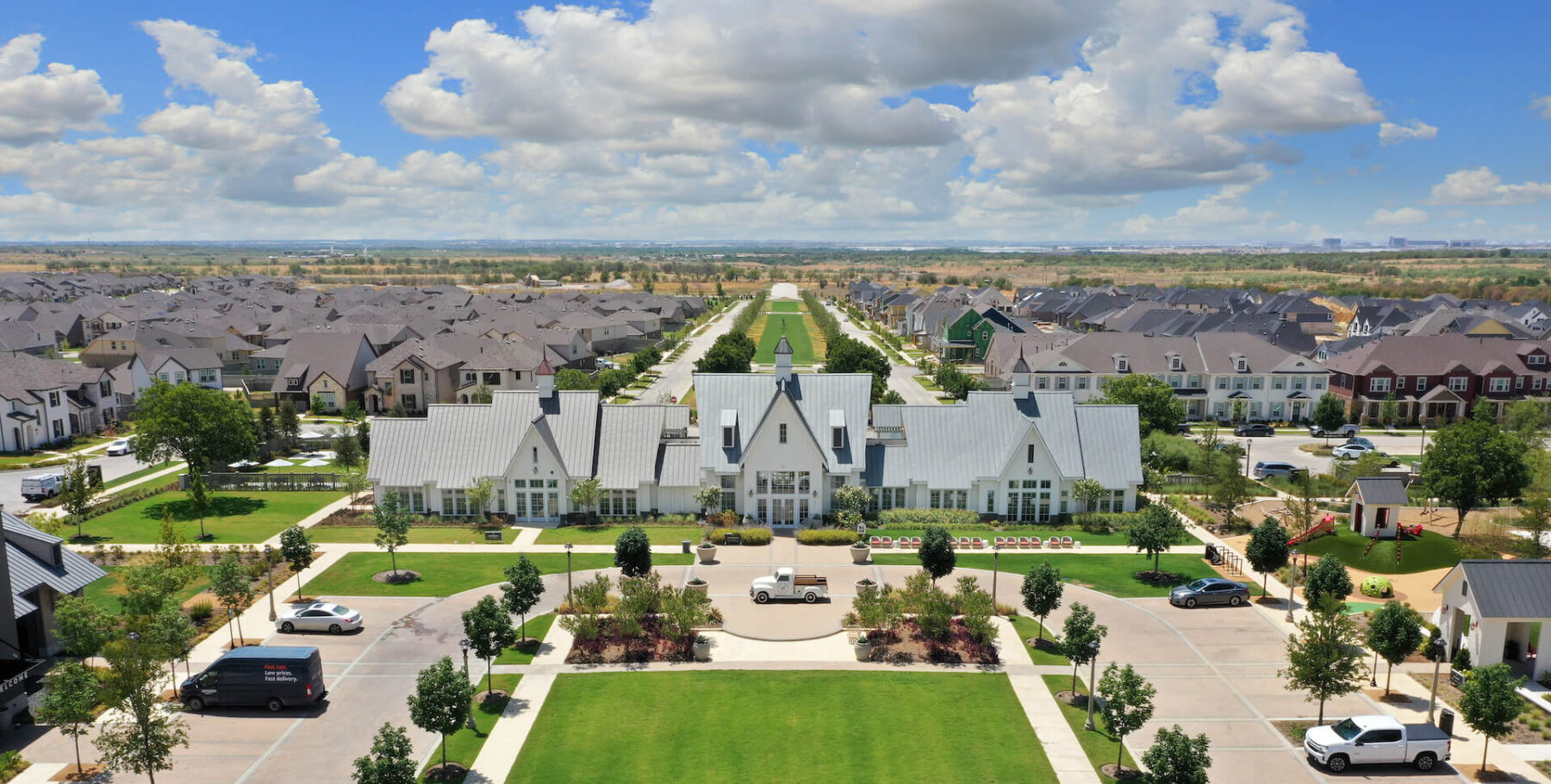
When interest rates began to rise from their historic lows of 2021, existing home inventories dwindled creating a sellers’ market in residential real estate. Bidding wars ensued and sellers had the upper hand in established neighborhoods. In new home communities, buyers found a broader selection, less restrictive buying terms, and more favorable pricing, thanks to builders’ incentives.
With mortgage rates stabilized for now, existing home inventories have improved and the real estate market has become fairly balanced. Buyers have more choices, in terms of both existing homes and newly built homes, and are wielding more negotiating leverage.
Builders in new home communities are upping their game, offering a variety of incentives for buying a home. Below we explore the latest trends in new home builder incentives, highlighting the unparalleled opportunities for prospective homeowners to capitalize on these offers. If you’re in the market for a new home in a vibrant community, read on to learn more about the types of builder incentives you might find!
Why Do Builders Offer Incentives for Buying a Home?
In an effort to boost sales, a significant number of home builders nationwide are offering incentives for buying a home. During the period from June 2024 through February 2025, roughly 60% of builders offered special and incentives like lower mortgage rates, assistance with closing costs, and complimentary upgrades. And, according to the National Association of Home Builders (NAHB), roughly one third of the nation’s builders lowered their home prices by an average of 5% during this period. Data shows this tactic is working: sales for new construction homes were up 2.6% last year (with 1.02 million units sold) while sales of existing homes fell 0.7% in 2024 to a 30-year low.
Builders are motivated to keep their inventory moving, particularly when they have an abundance of spec homes available. These homes, also known as inventory homes or quick move-in ready homes, are a priority for builders to sell in order to reduce “carrying costs” like utilities, maintenance and loan interest. These costs can accumulate significantly, making completed homes particularly ripe for deals as builders aim to minimize expenses. Moreover, the longer a spec home remains unsold, its value might depreciate due to wear and tear, urging builders to offer attractive deals to prospective buyers.
New Home Builder Incentives: Understanding Builder Offers
The respected builders at Hillwood Communities continue to come up with appealing offers to attract buyers. Builder incentives vary by market and depends on their company’s business model and financial strength. Here are some of the most common offers:
- Closing Cost Contributions: Builders that pay closing costs make their homes more accessible to a broader range of buyers, particularly those who may be first-time buyers or who are tight on cash. Typically this offer will be a fixed amount of cash that is applied to the buyer’s closing costs.
- Design Center Credits: These credits are a significant incentive for buyers looking to personalize or customize their new home to fit their own tastes and preferences. Whether it’s selecting premium finishes, opting for high-end appliances, or choosing custom cabinetry, these credits provide the financial flexibility to upgrade the home without impacting the buyer’s budget significantly.
- Below Market Interest Rates: Some builders have their own in-house mortgage companies. These builders, and others who collaborate with preferred lenders, can offer reduced interest rates to entice buyers to purchase. This can translate into considerable savings over the lifetime of a loan. This approach can significantly lower monthly mortgage payments, making home ownership more affordable, particularly in competitive markets where every opportunity to save (no matter how small) counts.
- Mortgage Rate Buydowns: Builders pay a portion of the buyer’s interest rate for a specific period (temporary buydown, like a 2-1 or 3-2-1 buydown) or for the entire loan term (permanent buydown). This lowers the buyer’s monthly payments in the initial years or throughout the loan. Some builders offer cash towards lowering the buyer’s interest rate. This incentive can be used with any lender.
- Interest Rate Locks: With fluctuating mortgage rates, builders sometimes offer the option to lock in a rate for a certain period. This guarantees the buyer a specific rate even if market rates increase, offering stability and predictability in monthly payments.
- Free or Discounted Upgrades: This builders’ incentive gives the buyer specific upgrades like a media room, office, or expanded outdoor living space at no extra charge.
- Appliance/Accessories Packages: Including essential appliances like refrigerators, washers, dryers, window treatments, gutters, and more can reduce the immediate expenses of furnishing a new home.
By providing these incentives, builders not only make their properties more appealing but also add value that benefits the buyer from the beginning, potentially leading to a more satisfying and customized homeownership experience.
New Home Deals: Financing the Dream
The journey to home ownership in a new construction community is often paved with unique financing opportunities. Beyond the traditional mortgage options, builders may offer specialized programs tailored to ease the financial burden on buyers. These unique financial tools are designed to provide peace of mind and financial flexibility to prospective homeowners, and can include examples like:
- Lease-to-Own Programs: These programs allow prospective buyers to rent a property with the option to purchase it in the future. This can be particularly advantageous for those building credit or saving for a down payment, providing a pathway to homeownership without the immediate financial commitment.
- Specialized Loan Programs: Builders may also partner with lenders to offer unique financing options tailored to the needs of new construction home buyers. These can include lower down payment requirements, loans that incorporate construction and permanent financing, or programs designed to assist first-time buyers.
New Construction Deals: Frequently Asked Questions
How much does it cost to buy down your interest rate?
Buying down your interest rate, commonly through points, varies in cost but typically equates to 1% of your loan amount per point. The actual cost and savings depend on your lender’s terms and how much you’re willing to pay upfront to lower your monthly mortgage payments.
How are home builder incentives in 2025 compared to 2024?
In 2025, builders are offering even more attractive incentives and offers as more pre-owned homes come on the market. Compared to 2024, builders are making more aggressive offers, such as price cuts on quick move-in homes, cash towards closing, and more significant upgrades, to attract buyers in a more competitive landscape.
What types of new home builder deals are available?
Available deals vary by builder but some examples are closing cost contributions, free upgrades (like premium materials or appliances), interest rate buydowns, flex dollars (which can be applied to your purchase in several ways), and special financing options. Some builders are also offering more unique incentives, such as extended rate locks and lease-to-own programs, tailored to ease the buying process and make new homes more accessible.
Exploring Your Homebuying Options in a Hillwood Community
As the real estate market continues to evolve, the opportunities within new home communities have never been more promising. With builders rolling out some of the best incentives seen in years, there’s no better time to explore your options. Whether you’re drawn to the idea of customizing your dream home or taking advantage of favorable financing terms, the path to homeownership is ripe with possibility.
As rates fluctuate and the world changes, the value of a new construction home in a vibrant lifestyle community remains a reliable source of potential value for years to come. We encourage interested buyers to immerse themselves in the experience – visit communities, tour model homes, and engage with our builders to discover the full spectrum of incentives available. In a market brimming with possibilities, communities like those developed by Hillwood offer a unique opportunity.
As one of the most dynamic and rapidly evolving markets in the United States, the Dallas-Fort Worth (DFW) metro area holds a significant place in both the Texas and national economies. As such, it’s often seen as a leading indicator of current housing trends, offering a glimpse into cutting-edge developments as they occur.
That said, the past few years have proven that forecasting anything with certainty in the real estate world can be a difficult task. Fluctuations in interest rates, supply, and demand have all remained volatile, making accurate predictions difficult.
Still, there are plenty of data points that offer indicators of what’s to come in the New Year. In this article, we’ll sift through the multifaceted factors shaping the DFW housing market to provide a clear and comprehensive outlook as we head into 2024.
DFW Housing Market: The Heartbeat of Texas and the Nation
The DFW housing market isn’t just a local reality; it’s also a national narrative. As a hub of economic activity for the Lone Star state and beyond, the DFW area’s real estate trends often reflect broader national shifts and play a pivotal role in shaping housing policies and economic strategies nationwide.
The region saw robust economic expansion in 2023, with continued employment growth and low unemployment, indicating a strong foundation for the housing market. Apartment demand and single-family housing permits increased, although (much like the rest of the country) multifamily permits declined due to tighter credit conditions and higher financing costs.
Key Factors Influencing the DFW Housing Market in 2024
Demographics
- Job Market and Employment Trends: The DFW area’s job market has been very robust, with total nonfarm employment increasing by 139,700 jobs during 2023. This growth took place across a wide variety of sectors, from professional and business services, to financial activities, to mining, logging, construction, and manufacturing. Nineteen corporations relocated their headquarters to North Texas in 2023, bringing thousands of jobs now with more projected in the coming years. The diversity of industries seeing growth in DFW points to a strong and multifaceted economy that is likely to continue attracting new residents and businesses through 2024.
- Population Growth and Age Trends: While the state of Texas has seen six of its cities among the nine fastest-growing cities in the South, the DFW metroplex has experienced the most significant population boom. Between 2021 and 2022 it had the highest increase in the population of any U.S. metro area, with 170k+ new residents and there are no signs this growth has slowed. These figures suggest a dynamic and expanding demographic landscape in the DFW area, a major influence on its real estate landscape.
- In-migration from Other States and Countries: The population growth across the DFW metroplex is fueled by significant in-migration from other states and countries. This influx is driven by the area’s economic opportunities, cultural amenities, and overall quality of life. The Dallas-Fort Worth area’s capacity to attract a diverse population contributes to its dynamism and resilience as an economic hub.
Economy
- Interest Rates and Mortgage Affordability: In 2023, the Federal Reserve continued its string of interest rate hikes, which subsequently impacted the housing market. Increased rates meant higher mortgages, which significantly affected affordability. Mortgage rates rose from about 3% to as high as nearly 8%, causing a slowdown in housing activity. But as the Fed halts further rate hikes in 2024, falling mortgage rates could turn the trend of decreasing home sales around.
- Inflation and Construction Costs: Inflation is also impacting the cost of construction and housing materials, which can affect housing affordability and the pace of new construction. The combination of high mortgage rates and inflation poses a challenge to the new housing market in the DFW area.
- Overall Economic Growth: Despite these challenges, the DFW area’s strong population and job growth are expected to support the still-booming regional economy. The region’s economic expansion and employment growth have been outpacing national averages, suggesting a relatively resilient local economy.
Housing Supply
- Current Levels of Inventory and New Construction: In terms of housing supply, there has been a steady increase in single-family permit issuance since spring 2023, although the year-to-date issuance as of August was down compared to the previous year. This indicates a cautious but ongoing growth in new home construction.
- Impact of Zoning Regulations and Development Costs: Zoning regulations and development costs are critical factors that can influence the supply of new homes. High construction and financing costs, as well as regulatory barriers, can limit the pace and scale of new housing developments.
- Availability of Land for Development: Another crucial factor affecting housing supply is the availability of empty land for new home development. The DFW area, being one of the busiest large U.S. metros in new construction, could face challenges ahead when it comes to finding suitable and affordable land for further development, especially as the population continues to grow.
Housing Demand
- First-time Homebuyer Trends and Preferences: In 2023, half of all homebuyers were purchasing their first home, marking a significant increase from previous years. The surge in first-time buyers is partly due to existing homeowners choosing not to sell or buy new homes, as many are locked into mortgage rates that sit well below current levels. The rise in mortgage rates has impacted first-time buyers significantly, drastically reducing their purchasing power. For instance, a buyer with a budget of $3,000 a month could afford a $429,000 home at a 7.4% mortgage rate, a notable decrease from what could have been afforded at lower rates even a year ago.
- Demand from Millennials and Other Age Groups: Millennials and other younger demographics are increasingly feeling the pressure of high housing costs. Many in this age group believe the government hasn’t done enough to make housing affordable, as evidenced by a recent study. The gap between home prices and consumer income has widened significantly, with the income required for a typical first-time buyer rising from about $70,000 in 2019 to $90,000 just three years later in 2022.
- Impact of Remote Work on Housing Choices: It’s no surprise that the rise in remote work has dramatically influenced the housing preferences of new home buyers. With the need for proximity to workplaces reduced, many remote workers are opting for homes in suburbs and rural areas, seeking larger living spaces, access to nature, and a lower cost of living. This shift is driving demand in these areas and is reflected in the types of homes being purchased and their locations.
Government Policies
- Federal Housing Policies: In 2023, the Federal Housing Finance Agency (FHFA) announced updates to Fannie Mae and Freddie Mac’s Equitable Housing Finance Plans. These updates aim to provide equitable access to affordable and sustainable housing, including actions to remove barriers for Latino renters and homeowners, support for locally-owned modular construction in communities of color, and the inclusion of rental payments and cash flow in automated underwriting systems. These initiatives are part of a broader strategy to promote fairness and accessibility across the entire housing market.
- State and Local Policies in Texas: The Texas legislature has introduced several new bills to try and address the housing affordability crisis by speeding up the construction of new homes and apartments. The proposals include allowing builders to use less land for single-family homes, easing city housing regulations, and creating a state housing tax credit to supplement the federal program. Additionally, there are proposals to set up a state fund to finance housing for middle-income workers like teachers and healthcare workers.
Predicting the DFW Housing Market in 2024: a Brighter Outlook Ahead
Entering 2024, the Dallas-Fort Worth housing market appears poised for nuanced changes. Key factors influencing this market include robust population growth, a thriving job market across a variety of diverse industry sectors, and the ongoing impact of remote work on housing preferences. However, challenges such as rising interest rates, inflation, housing supply and affordability persist, affecting both demand and supply.
For homeowners, new homebuyers, and investors navigating the DFW housing market in 2024, a strategic and informed approach is crucial. The metroplex area remains a popular destination, and thus a competitive one when it comes to buying a home. Homebuyers should be aware of the higher income requirements for purchasing homes in Dallas proper, with the median sale prices sitting at around $275,000 in 2023. Exploring surrounding suburban areas in Texas where the income necessary to afford a home is relatively lower, might offer more opportunities.
Remote work’s continued influence suggests a preference for affordable new homes in DFW that can accommodate home offices and offer a high quality of life. Dallas Fort Worth has proven to be an incredibly attractive destination for remote workers and could see sustained demand in housing developments that cater to this particular demographic.
While the outlook for 2024 is optimistic, potential homebuyers and investors should be aware that unforeseen events (e.g. natural disasters or geopolitical instability) could disrupt the housing market unexpectedly. Staying informed, flexible, and prepared will be key to successfully navigating the DFW housing market in the coming year. We always recommend consulting with a trusted Realtor throughout the homebuying process.
DFW Housing Market Forecast 2024: FAQ’s
Will Dallas home prices drop?
While predicting exact price movements is challenging, the Dallas housing market is showing signs of moderation. Prices may not significantly drop but could stabilize or increase at a much slower rate in 2024.
Are Texas home prices going down?
As of 2024, Texas home prices have experienced a slight decrease from recent highs, but not a steep drop. This trend is primarily driven by higher mortgage rates, exerting downward pressure on home sales and leading to a 5.9 percent year-over-year decline.
And while home prices are projected to fluctuate statewide depending on the region (for example, the DFW area saw sharp declines in new home pricing during 2023), the overall market remains strong. Instead of bottoming out, overall home prices are expected to rise slightly by the end of 2024.
What is the housing market forecast for Dallas in 2024?
Markets like Austin, Dallas-Fort Worth, and Houston remain hot, driven by strong job growth, population influx, and a relatively affordable cost of living compared to other major U.S. cities.
What are the hottest real estate markets in Texas?
Markets like Austin, Dallas-Fort Worth, and Houston remain hot, driven by strong job growth, population influx, and a relatively affordable cost of living compared to other major U.S. cities.
Is Texas in a buyer’s or seller’s market?
While it has been a seller’s market in recent years, Texas is currently moving towards a more balanced market. 2024 may see conditions that are much more favorable to buyers, such as increased inventory and slower price growth.
Explore Your DFW Homebuying Options in a Hillwood Community
If you’re considering a new home in Dallas-Fort Worth, Hillwood Communities offers a range of lifestyle communities. It’s an ideal time to find a new home in the thriving DFW metro area, with many builders offering attractive incentives! We encourage you to tour our communities, visit the builders’ model homes, or contact us directly for more details.
Houston’s allure as a destination of choice for homebuyers continues to rise, with its population showing consistent growth over recent years. As more people flock to this vibrant city, the hunt for affordable housing becomes increasingly challenging, even in an area long praised for its affordability.
So, what are savvy homebuyers doing about it? Instead of staying within the city center, more and more folks are turning their search toward Houston’s outer loop communities, where affordability meets quality living.
Why Are People Moving to Houston?
What are the benefits of relocating to greater Houston? Well, the huge influx of new residents into the “Capital of the Sun Belt” isn’t happening by chance. Drawn by the lack of state income tax and a business-friendly climate, a surge of new corporations moving to the region is creating a spike in job opportunities.
But Houston’s allure extends well beyond its business incentives. The city offers a diverse cultural landscape, with a vibrant arts scene, myriad dining options featuring global cuisines, and an array of entertainment choices that cater to a wide range of interests and lifestyles.
Houston also boasts numerous top-rated universities and medical research facilities, making it a hub for educational advancement and healthcare excellence. Add to that the city’s extensive park systems and green spaces, and it’s easy to see why so many homebuyers are choosing Houston.
How a Hot Housing Market Affects Prices of New Homes in Houston, TX
Like many metro areas nationwide, Houston’s sizzling housing market has slowly begun to cool as rising interest rates have pushed mortgages to higher levels.
According to a recent report by the Houston Association of Realtors (HAR), the ripple effects of these increased rates are now being seen in the sales of pre-owned homes. With mortgage rates currently hovering around 7%, a significant uptick from the historically low rates seen in previous years, many potential sellers are opting to stay put to maintain their current, more favorable mortgage rates. This trend, known as the “golden handcuffs” phenomenon, has contributed to a decrease in the sales of pre-owned homes, with many homeowners preferring to wait it out.
This combination of higher mortgage rates, a continued limited inventory, and relatively high home prices have made the affordable housing market in Houston proper less accessible. However, there is a silver lining. The Houston Chronicle recently suggested that the market is normalizing back to pre-pandemic numbers, indicating an easing of prices and a better time to buy than in the recent past.
In fact, according to a report from the Houston Association of Realtors, the median home price in Houston saw a modest increase of just 1.6% in January 2023 compared to the year prior. This slower rate of price increase, coupled with a more balanced market for the remainder of 2023 and into 2024, suggests that the inventory levels of affordable homes are becoming more favorable for buyers. For those looking to purchase affordable housing in Houston, this signals a welcome trend toward more buyer-friendly territory.
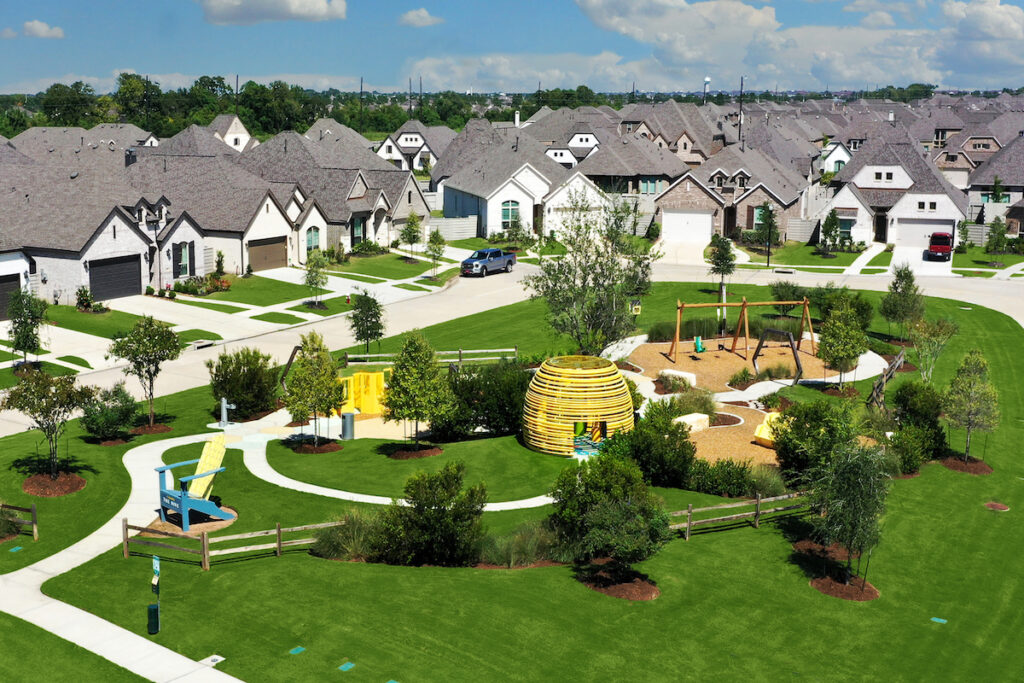
Houston Exurbs: More Affordable New Homes in Houston
As prices and inventory in the city center continue to moderate, more homebuyers than ever are flocking to Houston’s exurbs. These outlying areas (which are increasingly popular across the state of Texas) are known for their tranquility and spaciousness, attracting those who seek the balance of suburban living with the convenience of nearby urban amenities.
As the heart of Houston thrives with activity, the exurbs offer more laid back neighborhoods, where families can plant roots without sacrificing accessibility to the city’s diverse offerings. The allure of more square footage, larger lots, and the promise of a close-knit community life resonates with buyers looking for value without compromising on lifestyle.
The exurbs offer more than just space and better prices, though; they also represent significant potential. Many of these areas are on the cusp of growth, with new developments and infrastructure projects on the horizon. This foresight into the future growth of Houston’s outskirts is a significant draw for buyers who see their new homes as investments in their family’s future and financial well-being. It’s no wonder, then, that 80% of new homebuyers in Houston are moving to the exurbs.
What to Know When Looking for Homes Outside Houston Texas
When venturing into the outer loop Houston areas, consider several factors:
- Commute Times and Transportation: Proximity to major highways and public transportation can make a significant difference in daily life. A drive from most exurbs to downtown Houston is manageable, allowing professionals to enjoy suburban tranquility without sacrificing urban convenience.
- Schools: The quality of education is paramount for families, so be sure to research the schools in the area. It’s wise to delve into the school district ratings, explore the variety of extracurricular activities available, and perhaps visit some campuses to truly understand the educational environment your children will be part of.
- Amenities: Look for communities that offer amenities to match your lifestyle. Are you looking for green spaces for leisurely weekends, or shopping centers for a dose of retail therapy? How about fitness centers or local community hubs? The exurbs around Houston are renowned for providing exceptional community amenities that cater to a fulfilling lifestyle.
- Future Growth & Potential for Property Appreciation: Areas poised for growth can be a wise investment, potentially leading to property appreciation. Choosing a master-planned community that’s been thoughtfully developed with property value growth in mind can set you up for future success. With a focus on sustainable growth, communities like these are designed to enhance the value of your investment over time.

New Construction Homes: Areas Outside of Houston, Texas
As Houston’s exurbs continue to grow in popularity, homebuyers are searching for communities that embody the very best these areas have to offer. Notable among them is Hillwood Communities – a respected developer in the Houston area known for partnering with the industry’s top builders to offer beautiful new homes.
But beyond the homes that make up their neighborhoods, Hillwood’s communities are guided by principles that aren’t just empty statements. Instead, these principles represent the lived experience of the residents who call those communities home. Each is a testament to generational design, innovation, energy efficiency, and a harmonious blend of aesthetics and functionality.
At the heart of our philosophy lies a dedication to creating spaces that foster well-being, enrichment, and stewardship. These communities are designed to be environments that encourage personal growth, communal learning, and a deep respect for the natural surroundings. This holistic approach to development has garnered Hillwood Communities countless awards, accolades, and industry certifications, reflecting our unwavering pursuit of quality and spotlighting our role as a leader in forward-thinking residential development.
In line with our vision for continued growth and excellence, Hillwood is expanding its presence in the Houston area with the introduction of our latest development, Valencia by Hillwood. This new home community is poised to embody all the values and qualities that have become synonymous with the Hillwood name, offering residents the opportunity to live in a community that prioritizes connection and the well-being of its residents.
Finding Your New Home in Houston at a Hillwood Community
As Houston continues to change and grow, its exurbs will remain a prime destination for families and new construction homebuyers for years to come. The exurbs offer not just more affordable housing options, but a quality of life that’s increasingly hard to match within the city center. With Hillwood Communities, you can find a home that is an investment in your future, offering all the benefits of Houston living with the added perks of space, community, and value.
For those looking to make their home in the Houston exurbs, Pomona, an award-winning Hillwood community, is a prime example of the quality and affordability available outside the loop. And with our new Valencia community on the horizon, the options for more affordable new homes in Houston are set to expand even further.
Want to learn more? Explore Hillwood Communities today.
If you’re dreaming of moving to the Dallas-Fort Worth (DFW) Metroplex this year, you’re not alone. DFW continues to lead the country in population growth, with approximately 1.3 million people relocating to the area in the past decade. While additive to the local culture and economy, this influx has also led to increased demand for housing, making it challenging for some buyers to find affordable options.
Amidst the uncertainty, a series of communities have emerged that offer a level of affordability unseen elsewhere in the DFW metroplex: the “outer loop.” Read on to learn what exactly makes these neighborhoods so appealing (and which of them you should consider).
Understanding the DFW Housing Market: Factors Contributing to High Costs
The housing market in DFW is characterized by high demand, particularly for pre-owned homes in well-established suburbs and residential areas of Dallas and Fort Worth. Predictably, this demand has resulted in rising property prices, specifically within Dallas’s “inner ring,” comprising the area inside I-635. Increasing property taxes and a rise in construction costs are additional variables that contribute to the overall escalation in housing costs, both in the DFW area and nationwide.
Advantages of the Outer Loop for Affordable Housing
The term “outer loop” refers to the exurban areas located at a greater distance from the central cities of Dallas and Fort Worth. Specific suburbs in this category include Argyle, Northlake, Little Elm, Melissa, and Celina.
What these communities lack in close proximity to the bustling DFW city center, they more than make up for in affordability, availability, and quality of life. Properties in the outer loop generally offer lower prices compared to those in the city, often as much as $100,000 less for a similar floor plan or amount of square footage. Additionally, buyers are drawn to outer loop areas in an effort to escape inner loop congestion and to enjoy a quieter, more relaxed suburban environment.
Research Methods for Identifying Outer Loop Neighborhoods
Want to learn more about outer loop neighborhoods? Research is easy enough thanks to sites like Zillow and Realtor.com, which offer comprehensive listings and information on available properties. Of course, local real estate agents are a helpful resource too, since they possess specialized knowledge of these areas and can provide valuable insights.
New home communities are a popular choice for buyers seeking homes outside the loop. Nestled in many up-and-coming exurban cities, these developments offer new construction homes in many types, sizes, and styles, plus great schools, and an amazing array of resort-style amenities. Renowned for their award-winning lifestyle programs, Hillwood Communities like Union Park in Little Elm, Pecan Square in Northlake, and Harvest in Argyle/Northlake are particularly noteworthy for their focus on creating neighborhoods that offer an outstanding quality of life. Whether you’re looking for a vibrant community, proximity to nature, or exceptional amenities, these communities offer something for everyone.
Key Considerations for Outer Loop Homebuyers
- Commute and Transportation: Nothing affects your daily routine like your commute to the office. And while the outer loop may be farther from central business districts, a significant number of companies (including Toyota, Liberty Mutual, or Caterpillar, Inc.) have recently moved their corporate headquarters to the DFW suburbs. These corporate relocations can significantly impact commute times, potentially making them more manageable than one might initially assume.
- Amenities and Education: Many of these exurban communities feature highly rated public and private schools, offering excellent educational opportunities for families. The school districts often boast high test scores, outstanding extracurricular activities, and lauded advanced placement programs, making them highly desirable for parents who prioritize education. Additionally, outer loop communities are often replete with various amenities like parks, walking trails, and recreational areas, ideal for outdoor activities and family outings. Shopping centers and retail outlets are also common, offering convenient access to grocery stores, boutiques, and dining options.
- Investment Potential: Homes in Hillwood Communities are designed with a focus on sustainability and future value appreciation in mind, making them a smart long-term investment. These neighborhoods are strategically located in areas with high growth potential, often near major transportation routes and corporate hubs. Their intentional master planning and community features are likely to result in property value appreciation over time, offering homeowners a significant return.
Frequently Asked Questions
What is the Outer Ring in Dallas?
The Outer Ring in Dallas refers to the exurban areas that are situated at a greater distance from the central cities of Dallas and Fort Worth. These areas are generally beyond the immediate suburbs and offer a quieter lifestyle, often with lower property prices and less congestion.
Where are the Exurbs in DFW?
The exurbs in the Dallas-Fort Worth Metroplex include specific suburbs such as Argyle, Northlake, Little Elm, Melissa, and Celina. These areas are part of what is commonly referred to as the “outer loop” or “outer ring” of DFW and are characterized by their distance from the city center.
Where are the fastest-growing cities in DFW?
The fastest-growing cities in the DFW area include Frisco, Celina, and Arlington. These cities have experienced significant population growth in recent years, driven by factors such as corporate relocations, quality of life, and availability of amenities.
Where is the proposed DFW Outer Loop?
The proposed DFW Outer Loop is a planned transportation project by TxDOT aimed at creating a loop highway that would encircle the Dallas-Fort Worth Metroplex. The project is still in the planning stages, and specific details such as the exact route and timeline for construction have yet to be finalized.
Find Your DFW Home Outside the Loop
The outer loop of the DFW Metroplex offers a viable solution for those seeking new homes in a challenging market. With typically lower property prices, reduced congestion, and the easy availability of amenities, homes in outer loop communities, like those offered by Hillwood Communities, present a compelling alternative to more central locations. If you’re interested in learning more, check out our active communities or contact us today.
With the popularity of new homes reaching all-time highs post-pandemic, it’s no surprise that new build home communities are experiencing a similar surge in demand. These vibrant neighborhoods are attracting a diverse range of generations, each with their unique reasons for making the move.
So, who exactly is calling these communities home? Read on to find out.
Why are People of Many Generations Moving to New Build Home Communities?
In many areas, the pickings for existing homes are increasingly slim. But new home communities are bursting with opportunities, offering an array of designs that can be built on available homesites as well as quick move-in homes that are ready now or will be in the near future. And it’s not just locals who are taking notice. Multigenerational families and foreign-born buyers are also joining the mix in increasing numbers, driving the growing popularity of new home communities and contributing to a rich tapestry of new home community buyers.
Baby Boomers
Baby Boomers (Born 1946-1964) are the largest generation in the U.S., and they’re increasingly swapping their family homes for something a bit cozier in new build home communities. The allure? A fresh start, complete with modern conveniences and a lively community of active adults. As they near retirement and the “empty nester” phase of life, a new chapter in homeownership often makes sense for Baby Boomers. So do smaller, more manageable yards, built-in accessibility features, and community amenities and activities like tennis, pickleball, fishing, book clubs, and more.
Gen X
Gen Xers (Born 1965-1980) are also making their mark in new home communities. With plenty of earning power and families to provide for, Xers tend to seek out spacious houses nestled in top-notch school districts. They’re seeking room to grow, quality education for their kids, and a sense of community with other families. Of course, living near the endless opportunities provided by big-city living doesn’t hurt! Neither do amenities and activities for the whole family; think everything from hiking trails, pools, and sports courts to community gatherings, concerts and festivals.
Millennials
A major force in the new home market, Millennials (Born 1981-1996) tend to think long-term when it comes to homebuying. They prioritize eco-friendly living, smart home technology, and high walkability or bikeability, all of which make new build home communities a perfect fit. Additionally, Millennials tend to value healthy, stress-free lifestyles within a self-contained environment, a cornerstone of new home communities. And finally, the fact that homes in these neighborhoods have a reputation for being excellent long-term investments continues to drive this generation to choose them over other options.

Gen Z
The newest players in the housing market, Gen Z (Born 1997-2012) are just beginning to dip their toes into home ownership. While they’re still early in their journey, they’re definitely showing interest in new home communities as well. They’re on the lookout for homes equipped with the latest tech, located in conveniently placed neighborhoods that foster a sense of community.
What Percentage of Each Generation Owns Homes?
As of now, 79% of Baby Boomers own homes, making them the generation with the highest homeownership rate. Following them are Gen Xers, with a homeownership rate of around 71%. Despite being the most active homebuyer generation, only around 52% of Millennials own homes, largely due to the adverse economic conditions during their prime homebuying years. Gen Z, being the youngest generation, has the lowest homeownership rate at 26%, but this number is expected to grow in the coming years.
Of course, these numbers are always changing as economic conditions, societal trends, and personal circumstances shift. But one thing remains constant: the dream of home ownership is alive and well across all generations.
Frequently Asked Questions:
What age group buys the most homes?
It’s a common misconception that older generations dominate the homebuying scene. In reality, Millennials – typically those in their mid twenties to early forties – are currently leading the pack in terms of home purchases. They’re stepping into their prime earning years and are eager to invest in a place of their own.
What generation owns the most property?
When it comes to property ownership, Baby Boomers take the crown. Having had more time to accumulate wealth and property, this generation, aged 59 to 77, holds the most significant portion of the nation’s residential real estate.
What demographic owns the most homes?
In terms of demographics, married couples tend to own the most homes. This is often due to combined incomes and the shared desire for stability and long-term investment.
What percentage of Gen Z are homeowners?
Gen Z, the youngest generation in the housing market, is just starting to make their mark in the homeownership ranks. As of now, they represent a small percentage of homeowners, with just 26% owning homes. However, this number is expected to rise as Gen Zers begin to establish careers.
Which generations are buying homes?
All generations are active in the housing market. Millennials are currently the most active, but Gen X and Baby Boomers are also purchasing homes, often looking for upgrades or downsizing options. And let’s not forget Gen Z, who are just beginning to explore homeownership as well.

Explore Hillwood Communities: Perfect For Every Generation
No matter your generation, Hillwood Communities can make your homeownership dream a reality. We’re dedicated to building quality new home communities, in top school districts, that offer all the opportunities of metropolitan living with none of the stress. Our award-winning lifestyle communities are more than just neighborhoods of timelessly-designed homes with exceptional amenities. Informed by our company’s five guiding principles, each Hillwood Community is designed from the start to create a culture of belonging where homeowners can connect and share a sense of community. It is in these places where neighbors become lifelong friends, and shared experiences become treasured memories.
If you’re interested in a new home community built for many generations, explore Hillwood Communities today.
Having a place to call home is great, but homebuyers want more than a beautiful, comfortable, place to live. They also want a return on their investment. Home value appreciation is one of the many reasons homebuyers are drawn to Hillwood’s new home communities. Why? Because homes in Hillwood Communities are designed to have enduring value. Here’s how:
When it comes to creating a community where people will live for generations, and creating homes with lasting quality and strong resale value, we take our responsibility seriously.
- We choose locations in fast growing, up and coming areas that offer the charm of small-town living while still being convenient to nearby cities.
- We work with local stakeholders like school districts and city governments to ensure we achieve a close, respectful partnership.
- We design new home communities, filled with deluxe amenities, that are purpose-built for convenient, joyful, active lifestyles.
- We incorporate a lifestyle program with a full-time, on-site lifestyle manager to engage and inspire residents to come together to meet, develop friendships, and live an enriched life.
And of course, we partner with trusted new homebuilders to offer energy-efficient new construction homes that have all the modern features buyers want. All of these factors, and more, explain why houses in Hillwood Communities tend to retain their value.
If you’re a prospective buyer who’s worried the real estate market for buying a home in Texas may have changed, read this before you make your next move.
Average Home Appreciation vs. Texas Home Appreciation
Because not all homes appreciate at the same rate, it’s important to look at a number of factors before making one of the biggest purchases of your life.
The average home appreciation per year in the U.S. has historically hovered around 4%. The FHFA Housing Price Index reveals that home prices have increased by an average of 4.3% since 1991 and 4.7% since 2000. But in the last ten years (since 2012), home prices have increased, on average, 7.7%.
Texas housing appreciation rates are even more impressive given the state’s increasing popularity as a relocation destination. And for many Hillwood Communities, the odds of higher and faster appreciation are strong, given the strategic placement of our lifestyle communities. According to Neighborhood Scout, Texas housing prices have risen 125.74% over the last ten years, equating to an annual home appreciation rate of 8.48%.
Then there’s the normal home appreciation that comes with living in a new home community. Because of the way the community is built — in stages, over a number of years — homes in the later phases generally cost more that those in the first phases. This happens for a number of reasons, including materials and labor price increases, continued growth and development of the surrounding area, and the like.
“Buying in a master planned community is a solid long-term investment because a developer usually charges more for each building in every phase,” explains Pierre Carapetian. “Buying in the early phases of development will ensure that by the time the project is built, your property value will go up.”
8 Reasons New Home Communities Appreciate Faster
Though no one can tell you exactly how much your home will appreciate (or how soon you’ll see that value increase) there are some features that just make a home or a neighborhood more attractive to buyers than others. These include all the essentials, like top schools and quality homes, but also extra conveniences that homeowners value.
The developers at Hillwood Communities make it a priority to include all these important features, and more, in our new home communities, to ensure buyers realize lasting value for their investment.
Residents of Hillwood Communities enjoy:
- Modern, energy-efficient homes by the area’s best new home builders
- On-site schools located within desired school districts
- Top locations
- Resort-like amenities
- Active lifestyle programs with community-building activities
- Walking trails and open spaces
- Parks and playgrounds (including a dog park for our furry friends)
- Higher home resale value and buyer demand
Buying for Maximum Home Price Appreciation
The home values in Hillwood Communities have been so historically strong, some people choose to buy a second home at one of our properties.
Buyers choose a Hillwood Community for their second home to:
- Spend time with family that live in the area.
- Enjoy a milder climate in the winter (particularly for snowbirds who choose our Central Texas communities to warm up during the colder months).
- Take advantage of the recreational opportunities, amenities, and activities, as well as live near popular recreation areas.
- Purchase a home to live in after retirement.
Some Hillwood communities have a 55+ section with special amenities, activities, and homes designed exclusively for active adults. Additional standout features of these exclusive sections include an HOA that does most of the yard maintenance, making it a great place to enjoy an easier lifestyle.
Home Appreciation FAQs
The economics behind home appreciation can be complicated. Here’s a brief 101 to help you understand a few of the basics.
What is home appreciation?
A home’s appreciation is the amount of monetary value it gains in the period of time from purchase to sale.
Why do houses appreciate in value?
Though there are a number of reasons homes appreciate in value over time, supply and demand, particularly in hot markets like Texas, are a major factor.
What type of home appreciates in price the most?
New build, single-family homes tend to appreciate faster and stronger than other dwellings.
What are the factors that affect property value?
Location, neighborhood, age of the home, size, and local markets all significantly impact the property value.
Protect Your Home Value in a Hillwood Community
Hillwood Communities in the Dallas-Fort Worth Metroplex, greater Austin, and greater Houston have homes and homesites available in some of Texas’ most in-demand areas forecast to have long-term growth potential. Many builders are also offering great buyer incentives. Explore Hillwood Communities to find a new home you can ~appreciate~ for years to come.
The real estate market is constantly changing. The homebuying process is different now than it was even a year ago, leaving many to wonder whether they should even consider buying a house in 2023.
For anyone feeling discouraged, it’s important to take a step back and look at the marketplace objectively. There are some really great benefits to buying right now, especially in award-winning new home communities by Hillwood. Here are just a few of the reasons why you should buy now.
The buyer-seller market is equalizing.
Just a year ago, we had a strong seller’s market with intense competition amongst buyers to get the home/lot/location of their choice. This is no longer the case. There are more homes and building sites to choose from and less pressure to make a quick decision or buy a home before someone else grabs it.
As Yahoo! Finance points out, many housing experts expect to see increasing equilibrium between buyers and sellers, resulting in a fairly “even market” where neither has the clear advantage.
Home prices are decreasing as demand stabilizes.
Another point for the ‘why you should buy a home now’ camp are falling home prices. As demand has cooled, so have prices. This means no more paying way over asking price and competing with many other offers just to have a chance.
“Markets in roughly half of the country are likely to offer potential buyers discounted prices compared to last year,” says Forbes, with home prices dropping roughly 11% from their high mark in June of 2022.
More good news: Builders at new home communities have available inventory and want to keep product moving, so they are offering incentives to buyers! That means you can get a great deal in growing communities across Texas, which many think is the best place to buy a home right now for many reasons.
Mortgage rates are still at historic lows.
It’s true that mortgage rates have gone up versus a year ago, but they are still at historic lows and at the beginning of 2023 they dropped to their lowest point in months. Compared to the double digit highs in the 1980s when rates peaked at 18.63%, 30-year fixed rate mortgage rates are still very reasonable for many prospective buyers.
Ask any real estate or lending professional and they’ll tell you the same thing: “Marry the house, date the rate.” Meaning, when you find the home you love, take action. You always have the option to refinance if rates drop in the future.
Loan options are plentiful.
If you’re still feeling discouraged by the interest rates that are currently available, know that you have choices. The Consumer Finance Protection Bureau recommends speaking with a lending professional about financing options like:
- Adjustable Rate Mortgages (ARMs), a loan type which has, “a fixed interest rate in the beginning and then adjusts annually or every six months.” For more information see the CFPB’s Consumer Handbook on Adjustable Rate Mortgages.
- Temporary buydowns, a structure in which, “the mortgage payment is lowered for the first year or two in exchange for an up-front fee or a higher interest rate later.”
Again, it’s important to work with a trusted, qualified mortgage professional who can help you see which mortgage products and financing structures will be less expensive over the life of your loan.
2023 Homebuying Q&A:
Should I buy a home now or wait?
While this is a personal decision that should be made with your real estate agent and finance professional, housing experts say now could be a beneficial time to buy and take advantage of new home community incentives before rates increase.
Will 2023 be a good time to buy a house?
With a well-balanced buyer and sellers’ market, 2023 is projected to be a much calmer, less competitive time to buy a house than in the last few years.
Why should I buy a house now?
The Federal Reserve board, who controls the nation’s interest rates, is scheduled to meet eight times in 2023. While no one knows if they’ll continue to raise rates to offset economic realities like inflation, for the time being mortgage rates are steady and falling, so it could be a good time to act.
Become a Hillwood Communities Homeowner in 2023
Still asking yourself if 2023 is a good year to buy a house? Keep in mind that purchasing a home in a growing area can be a great way to make a smart investment and secure enduring value for your family. Hillwood Communities has new home communities in some of the most sought after housing markets in the country including DFW, greater Austin, and greater Houston. These booming areas are likely to experience continued growth, even in “down” markets, and a great long term return on investment.
Many of Hillwood’s lifestyle communities have available homes and homesites with builders who are offering impressive buyer incentives. You can look without committing by exploring some of Texas’ most life-enriching communities right from where you are. Get started on your homebuying journey today!
Does the housing market really chill out as temps do? The numbers – and the experts – say yes.
When the fire’s so delightful, many stay nestled all snug in their beds instead of house hunting. So if closing on a home of your very own has replaced visions of dancing sugar plums, you’ll be happy to know that the end of the year can be one of the best seasons to buy a house.
Prices may be lower.
Need some other smart reasons to consider buying a house in the winter? Here are five that made the nice list.
Take it from Nationwide: If you’re buying a house in December or January, they “typically cost 8.45% less than they do in June and August, according to a study from NerdWallet. Sellers are often encouraged to wait until spring to list their homes, and those who keep their properties on the market through fall and winter may be more willing to negotiate a deal.”
A savings of even 5% off the national home price ends up being tens of thousands of dollars. That also lessens your closing costs, putting even more back in your pocket. Just think of all the presents you’ll be able to buy!
Fewer Buyers Are in the Market.
Many buyers in the market means more competition for the home or lot you want. When there is a lot of interest in a property, a buyer has less negotiating power. You may even find yourself in a multiple bidder situation, which can really drive up the sale price.
But the holiday season (and the year’s end) is so busy that many people put off house hunting for a few months, meaning there will likely be less competition for the home you want.
Another factor: cash is typically tighter during the holidays. Your traditionally financed offer is less likely to be up against a competing buyer’s all-cash offer.
You might actually close quicker.
By this point in the year, everyone is looking forward to a little time off. No one wants to start their holiday break with tasks hanging over their heads. And that includes lenders and mortgage brokers.
With fewer files to manage, and the promise of some R+R around the corner, you may find that your loan officer actually has more time to devote to you. Since they may get paid per file they close, it’s an additional motivator to get you through the pipeline and into your dream home.
Capitalize on end-of-year tax savings.
Becoming a homeowner offers you more tax deductions than being a renter – yet another reason this can be the best month to buy a house. So long as you close before December 31st, you’ll have a lot more that you can write off on your taxes during the same calendar year.
Some of the most common home-related tax deductions include:
- Mortgage Interest
- Discount Points
- Property Taxes
- Home Office Expenses
- Mortgage Insurance
Sellers may be more generous.
Buying a house in December? Be prepared for sellers to be in a more giving mood. It is the most wonderful time of the year, after all.
It’s a time when folks are more likely to make compromises or throw in some extras just to make the season extra merry and bright. Be sure to stay reasonable with your asks and think twice before offering a fruit cake as your bargaining chip.

Holiday Homebuying FAQ:
Why are the holidays a good time to buy a house?
Less foot traffic and lower listing prices are just a few of the reasons why winter months can be a smart time to start your home search.
Should you buy a house during the holidays?
If you are looking to buy a home when demand is decreased, the holidays can be a great time to look. Just be sure you have time to devote to house hunting and closing.
Is it better to buy a house at the beginning or end of the year?
Buying a house at the end of the year can be your last opportunity to take advantage of some helpful tax savings. Of course, buying at the beginning of the year will earn you a bigger write off for deductions like property taxes.
Be Home for the Holidays at Hillwood
Why is December a good time to buy a house? This special time of year is different from spring and summer months when the real estate market is at its peak. Haven’t made your holiday wish list yet? Find the Hillwood lifestyle community that’s right for you and explore your new home options online so you can spend less time house hunting and more time hanging those stockings with care.
As Texas continues to see record-breaking numbers of relocation buyers across the state, Hillwood Communities is expanding its footprint in the Dallas-Fort Worth and Houston regional markets.
Houston
In October, 2021, Hillwood Communities closed on 440 acres in Manvel, Texas, to create its second Houston-area lifestyle community. Valencia by Hillwood will be home to 938 homes surrounded by miles of trails, multiple lakes, 15 acres for a planned future on-site elementary school, and 28 acres of mixed-use commercial space.
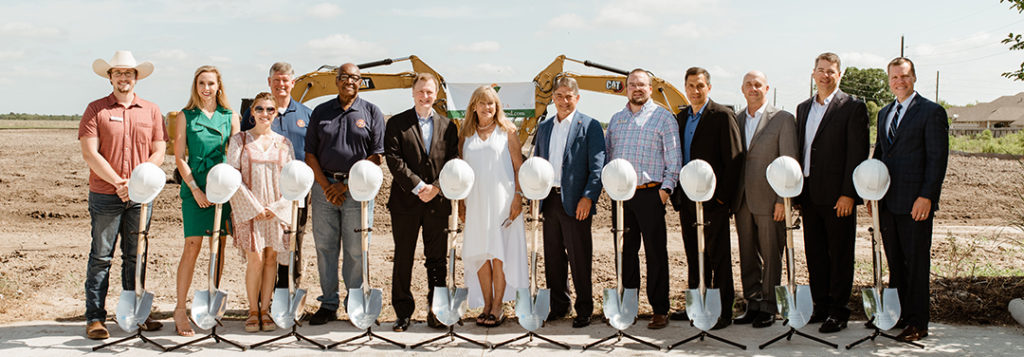
Breaking ground in May, 2022, approximately two miles from its first master-planned community, Pomona by Hillwood, the new community is situated minutes from beaches, state parks, shopping, dining, and other various recreational and entertainment opportunities. Convenient access to thriving employment centers, including the Texas Medical Center, homes in this community are expected to range from $300,000 to $600,000 from top-ranked builders Coventry Homes, Perry Homes, and Pulte Homes.
Dallas-Fort Worth
The DFW metroplex will see a rapidly expanding footprint to support the population and relocation boom in north Texas. Hillwood Communities closed on two separate properties in the AllianceTexas corridor town of Justin and City of Denton. Between the two communities, more than 8,000 homes are coming to the area.
The largest project is the current Hunter Ranch property in Denton. This 3,200-acre community will feature 1,100 acres of parks, trails, and greenspace, including the area’s tallest landmark of Pilot Knob. More than 6,000 homes and 5-million square feet of office, retail, and mixed-use space will make this the largest lifestyle community Hillwood Communities has developed in three decades. In partnership with Hillwood Properties, the new community will expand the residential and commercial opportunities within the AllianceTexas corridor.

In Justin, Texas, the current Traditions 744-acre property will blossom into a 2,300 home community complete with wooded outdoor areas and winding waterways. Additional mixed-use commercial space will add business opportunities to this growing rural enclave.
Both communities names and groundbreaking dates will be released at the end of 2022.
In the post-pandemic world, the need to anchor your business to a single geographic location is a thing of the past. As more and more businesses continue to loosen their “in office” policies or eliminate them entirely, workers have more freedom than ever to work — and earn — anywhere they’d like. So, in a world where many people can work wherever they choose, many are taking off for more entrepreneurial cities. If you can move, only one question matters: where is the best place to live?
Of all the available destinations in the United States, Texas consistently ranks as one of the most appealing for entrepreneurs, freelancers, or solopreneurs who are looking to relocate a business. In fact, the state has three of the 10 Best Cities for Entrepreneurs in 2022, according to The Zebra. With mild weather, a thriving and diverse population, and the 9th largest economy in the world (and growing), it’s no secret that the Lone Star state has seen an exponential influx of people relocating over the past few years. In fact, over 2 million people moved to Texas in 2021 alone. Texas boasts nearly 3 million small businesses and a net increase of both employees and establishments in the past few years.
There’s no doubt Texas remains one of the top destinations in the country for moving your business. But why is Texas thought of by many as the best place for entrepreneurs to live?
A Business-Friendly Environment
Apart from the sunshine, Texas offers a warm climate for businesses of all kinds, consistently ranking as the best state for business in the country. It’s also a magnet for business growth: in the past twelve months, only New York gained more jobs year-over-year than Texas. It’s easy to see why the state remains so attractive to business owners. While Texas’ cost of living is only slightly above the national average, its lack of a personal or corporate income tax offers its residents a well-above-average quality of life.
Diverse Community
With one of the most diverse populations in America, it’s no wonder that Texas cities continue to thrive. With three major metropolitan centers in the Top 10 most diverse cities in America, Texas’ cities offer a wealth of culture — whether through their restaurants, cultural institutions, or numerous community centers. This diversity is reflected in the Lone Star state’s business landscape as well, where 1.1 million people are employed by minority-owned small businesses.
Reliable Infrastructure
If you’re a solopreneur or freelancer, you already know the value of a city’s infrastructure. Your business, especially if it relies on fast internet access, transportation, and reliable utilities, is often only as good as where you live.
In Texas, that’s great news! Despite the state’s large rural areas, wireless internet is available in 100% of the state, and 90% of its residents have access to high-speed internet. And over the next five years, Texas stands to receive an influx of $35 billion in infrastructure funding, a welcome sign to incoming entrepreneurs.
Impressive Real Estate Options
While real estate costs nationwide have skyrocketed, Texas remains one of America’s most affordable states. With plenty of land to build new homes in close proximity to its thriving metropolitan areas, it’s no wonder homebuyers are flocking in particular to new home communities like those developed by Hillwood Communities.
For those who can live and work anywhere they like, the master-planned neighborhoods by Hillwood Communities are an appealing option. Offering a unique combination of innovative neighborhood planning and design choices, the chance to create your new home from the ground up is an opportunity like no other. Designed with modern technological needs in mind, each community also offers incredible amenities like parks, pools, fitness centers and other communal spaces meant to create a sense of community for each unique neighborhood.
FREQUENTLY ASKED QUESTIONS
What are some things to keep in mind before relocating to a new area?
Relocating your business is a complicated question, so it’s important to prioritize factors that affect your bottom line and quality of life. Things like local taxes and regulations, access to talent and global markets, reliable infrastructure, proximity to travel hubs, and the area’s unique culture are all important.
Is Texas good for entrepreneurs?
Yes, it is. Thanks to a business-friendly community and regulatory environment, zero corporate or personal income tax, and access to all the benefits of thriving cities, Texas is considered extremely favorable as a home for entrepreneurs. A recent report ranked Texas as the number one state for small businesses.
How many small businesses are in Texas?
A lot! As of 2020, Texas boasted a little more than 2.8 million small businesses.
Why do businesses come to Texas?
Texas has seen a huge boom in businesses relocating to the Lone Star State over the past few years, and for good reason. A combination of unique advantages — such as a deep and diverse workforce, robust infrastructure, metropolitan quality of life at a significantly lower cost of living, and zero state personal or corporate income tax — draws more and more businesses to Texas each year.
Find Your New Texas Home with Hillwood Communities
If you’re an entrepreneur, solopreneur, or freelancer in the market for a new place to call home, explore your new home options with Hillwood Communities today. Check out our award-winning new home communities in DFW, Austin and Houston and get to know our trusted builder partners.