Blog
Home design in 2026 is warmer, more personal, and more connected to the natural world than it has been in years. If you are shopping for a new home or thinking about how to make your next house feel like yours from day one, these are the trends worth knowing about.
Biophilic Design
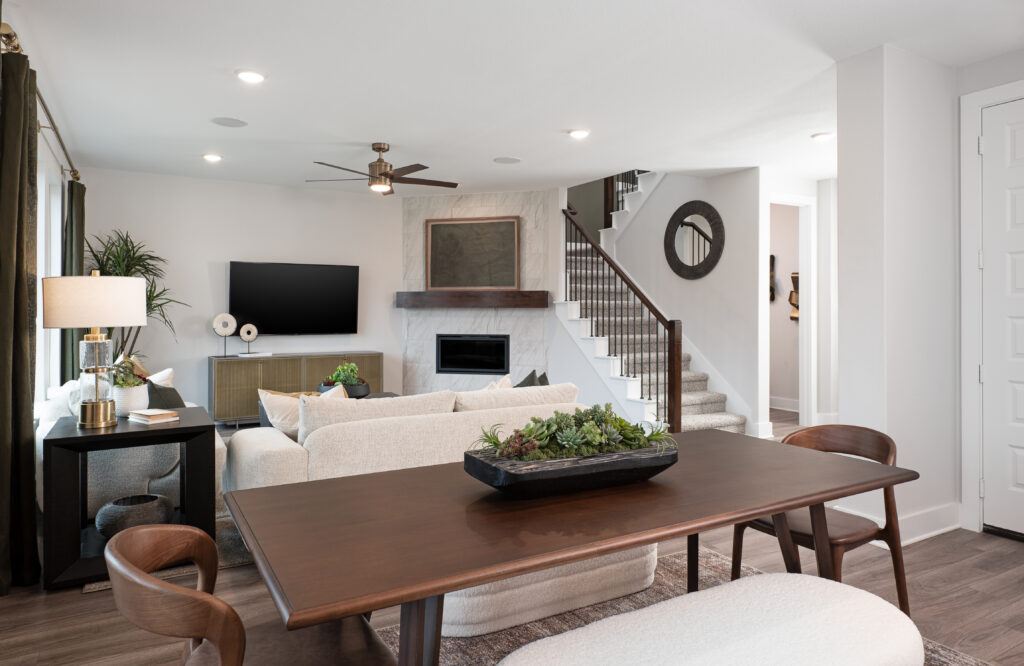
The idea behind biophilic design is simple: people feel better when their homes are connected to the natural world. That means maximizing natural light, incorporating living plants, and choosing materials that feel organic rather than manufactured. It is less a decorating style than a guiding principle — one that shows up in how a room is oriented toward windows, how plants are clustered to create a sense of lushness, and how wood and stone are used as primary surfaces rather than accents.
If you are moving into a new home and want to build on it, a mix of heights goes a long way — one larger floor plant paired with a few smaller ones at varying levels creates the layered, natural feel that makes a room come alive.
Natural and Tactile Materials
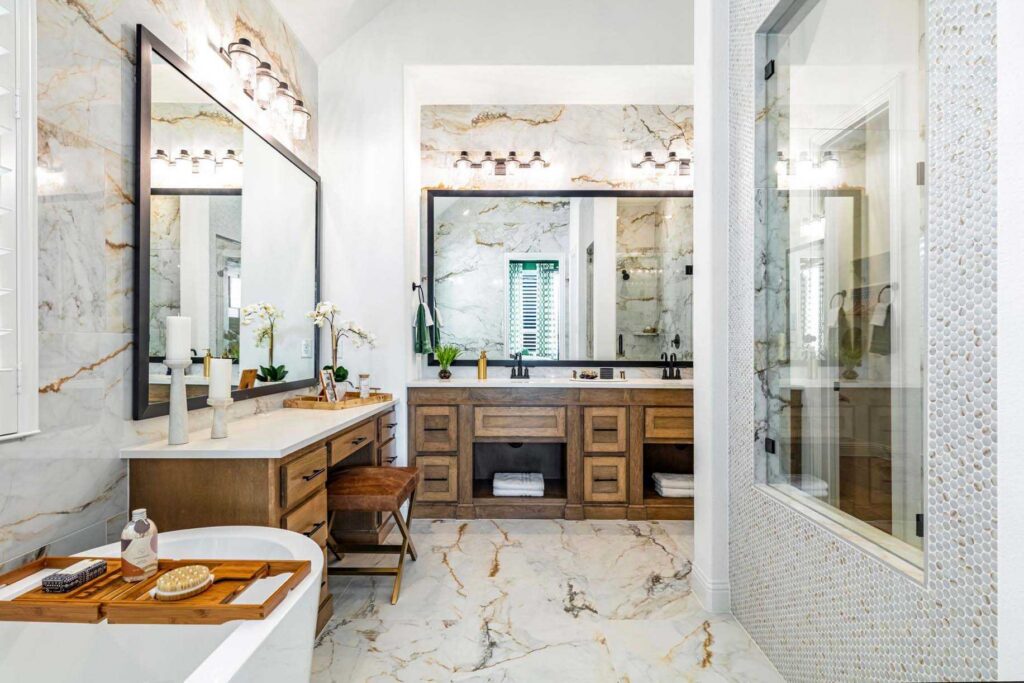
Cool grays and stark whites dominated home design for most of the last decade. What has replaced them is warmer and more grounded — natural wood in rich walnut and white oak tones, stone that you actually want to touch, woven textures like rattan and grasscloth that bring an organic quality to furniture and walls alike.
The appeal of these materials is that they age well. A dining table in natural wood looks better after five years of use than it did on day one. Rattan chairs develop character. Stone countertops and floors become more themselves over time. That is a different value proposition from the polished, uniform surfaces that defined the previous decade, and it resonates with buyers who see a home as a long-term investment rather than a backdrop for a social media photo.
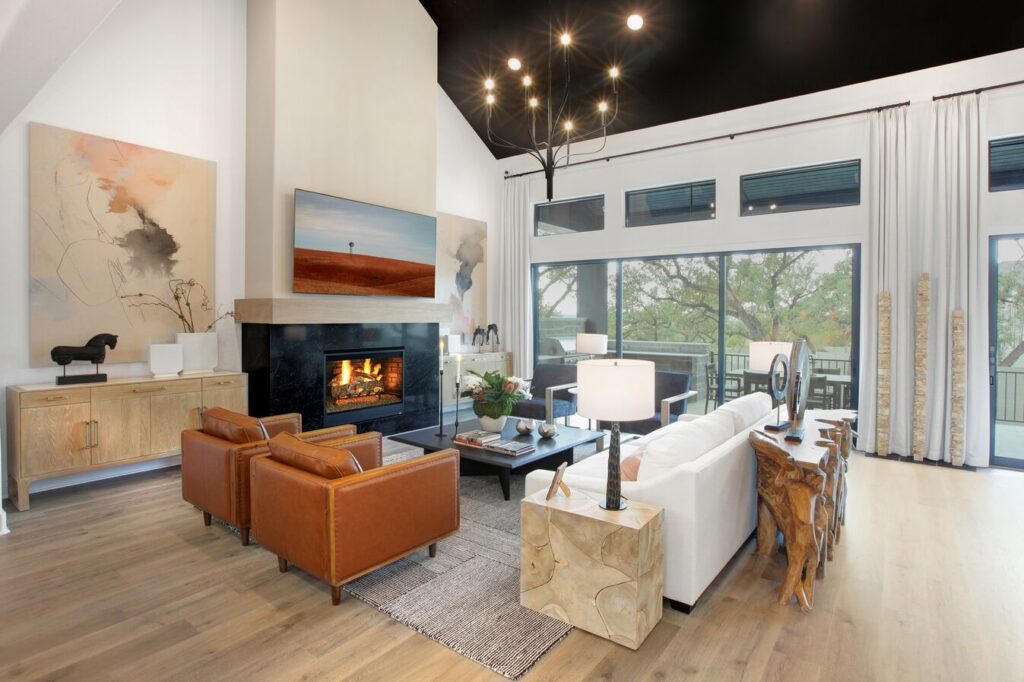
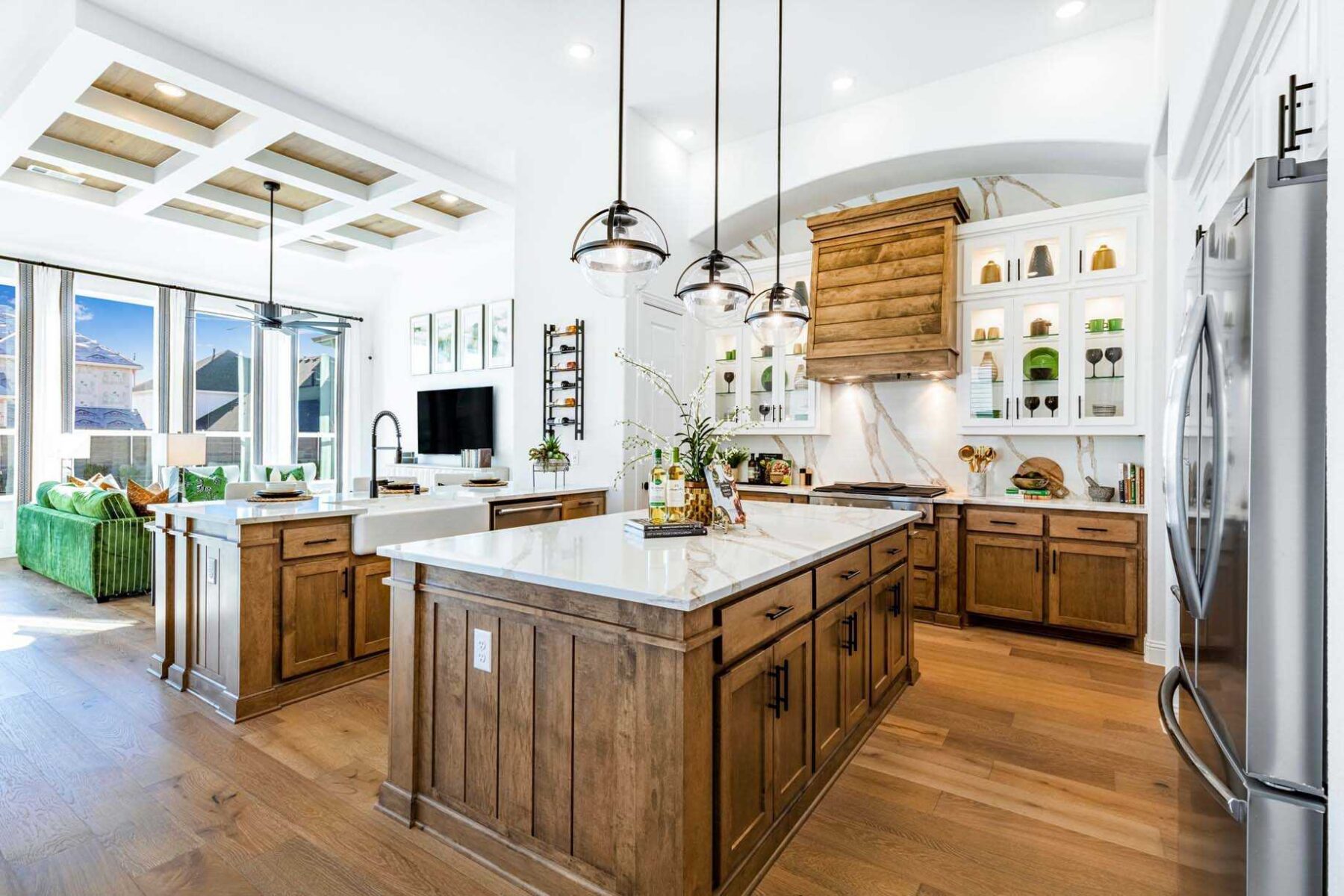
In practical terms, this shows up in cabinetry with visible wood grain, stone that carries through from countertops to backsplashes, and furniture that mixes materials — like wood, leather, cane, and other natural textures — in a way that feels collected rather than matched.
Architectural Paint Details
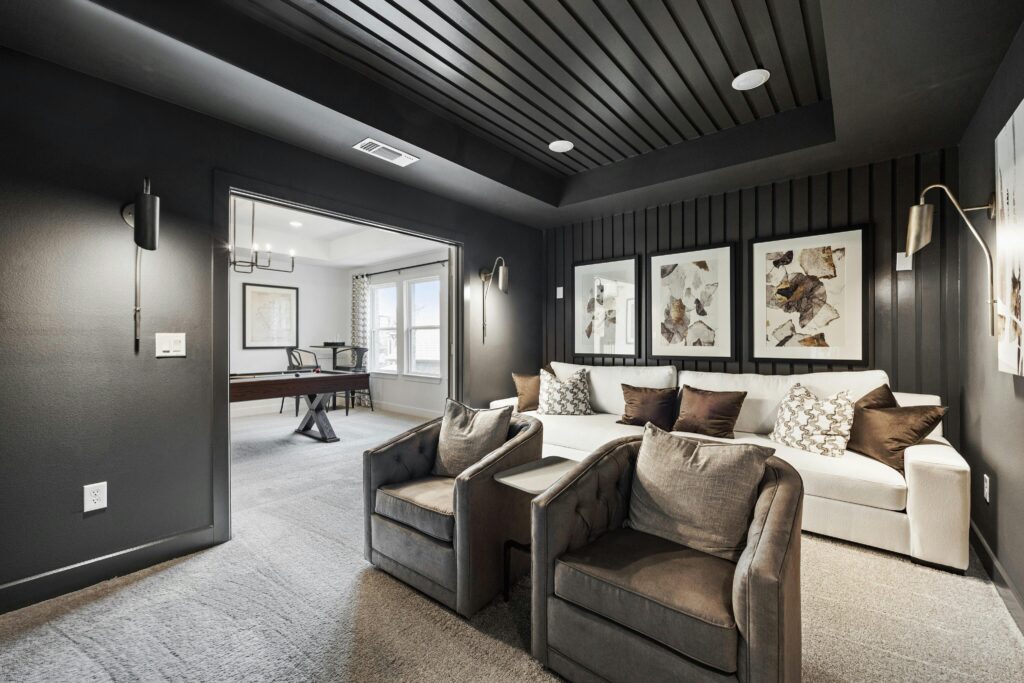
For a long time, the default in new construction was white walls, white ceilings, and white trim. That era is over. In 2026, paint is being used as a genuine design tool — one that can transform a room without changing a single piece of furniture.
The most talked-about technique right now is color drenching, where walls, ceiling, trim, and baseboards are all painted the same color. The effect is immersive in a way that painting just the walls never achieves. A media room is a natural fit — going dark on every surface, including the ceiling and baseboards, creates a theater-like quality that a room with white trim simply cannot match. It also looks more intentional, which is the point. The color itself matters less than the commitment to carrying it through every surface.
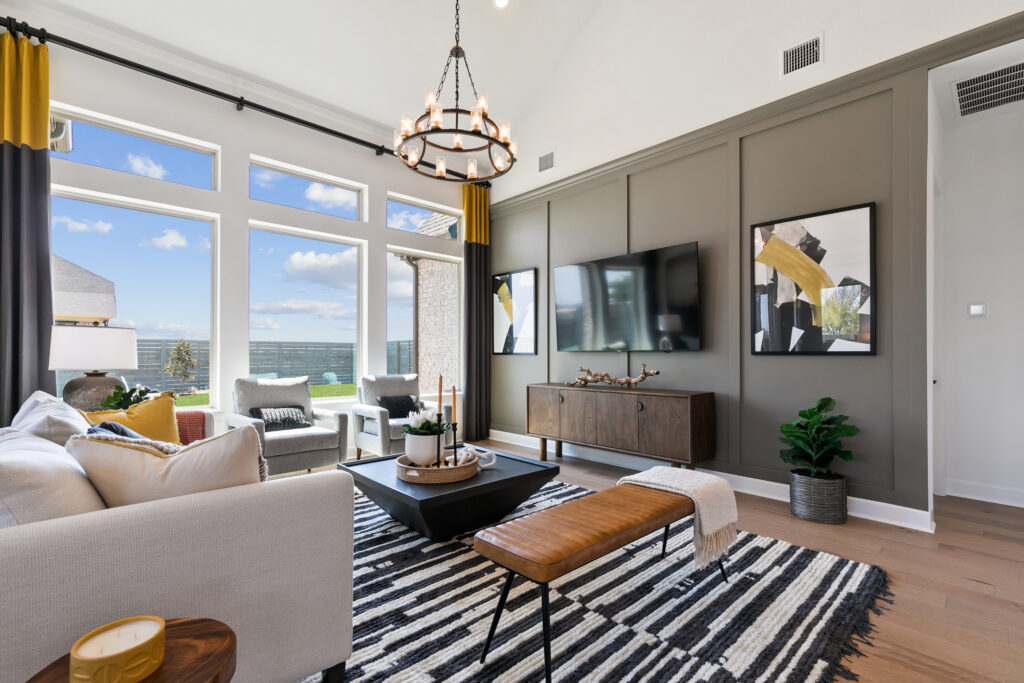
Beyond full color drenching, designers are painting ceilings in warm tones rather than defaulting to white, using earthy wall colors like terracotta, warm charcoal, and muted olive, and treating trim as part of the color story rather than an afterthought. These are all changes a homeowner can make after move-in, and any one of them can shift the feel of a room significantly.
Wallpaper and Pattern
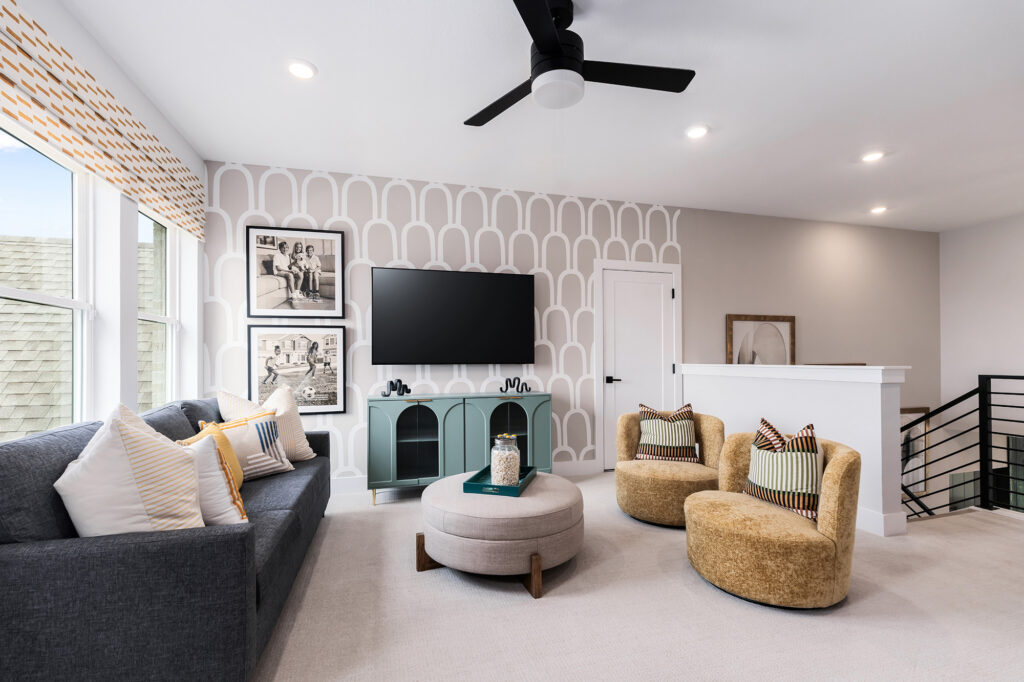
Wallpaper never fully disappeared, but it spent about fifteen years being treated as something your grandmother had, and you eventually stripped off. That has changed. Wallpaper is now one of the first things designers reach for when they want to give a room a strong identity quickly, and the options available today — botanical prints, textured grasscloth, abstract murals, stone and plaster-effect coverings — are a long way from the floral patterns of the past.
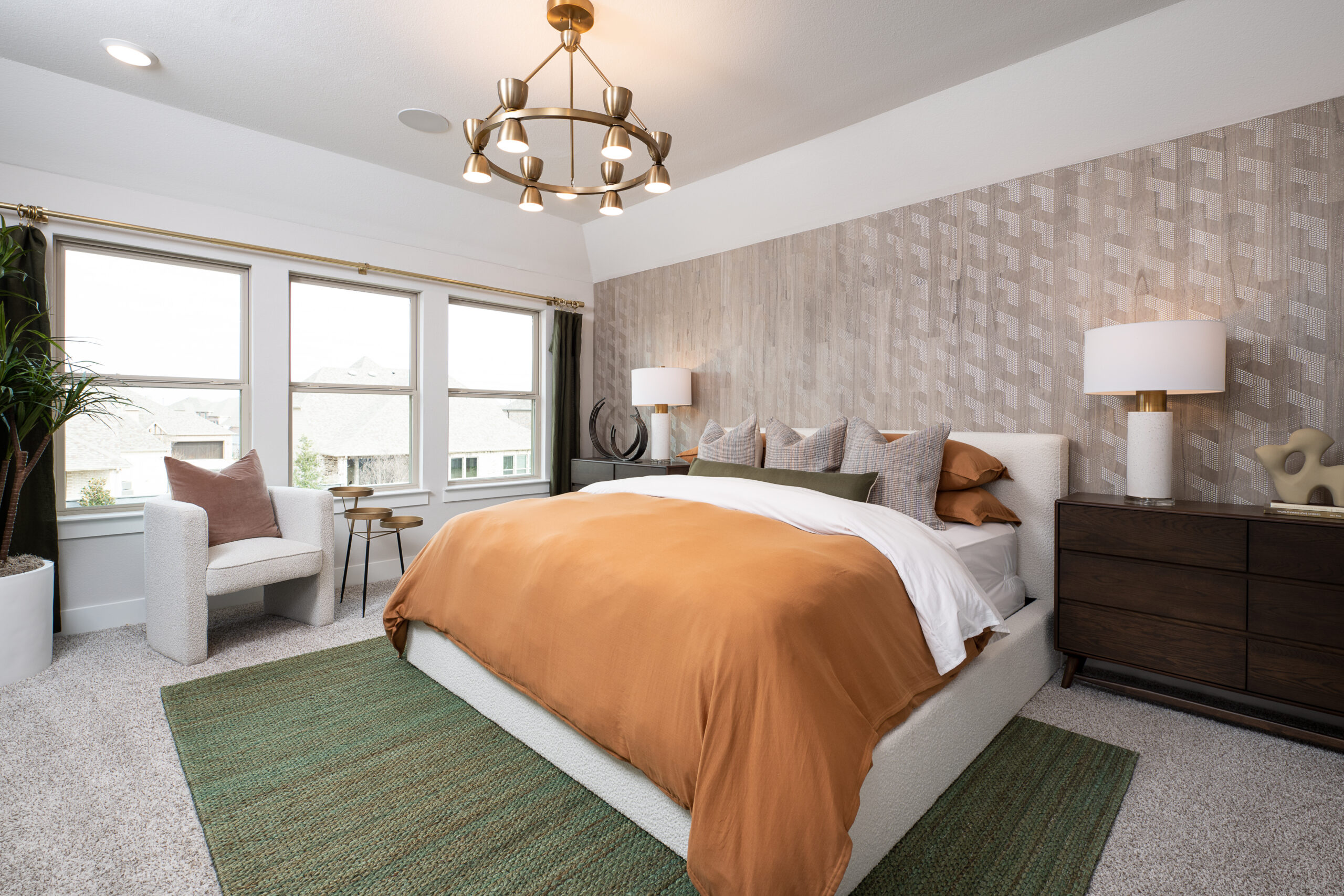
The approachable version of this trend, and the one most likely to appeal to a wide range of homeowners, is the single accent wall. A papered wall behind a bed, for instance, functions like an oversized headboard — it anchors the room and gives it a focal point without requiring a full commitment. The key is keeping a shared color running through the different patterns so they feel related rather than competing.
Flexible and Multi-Use Spaces
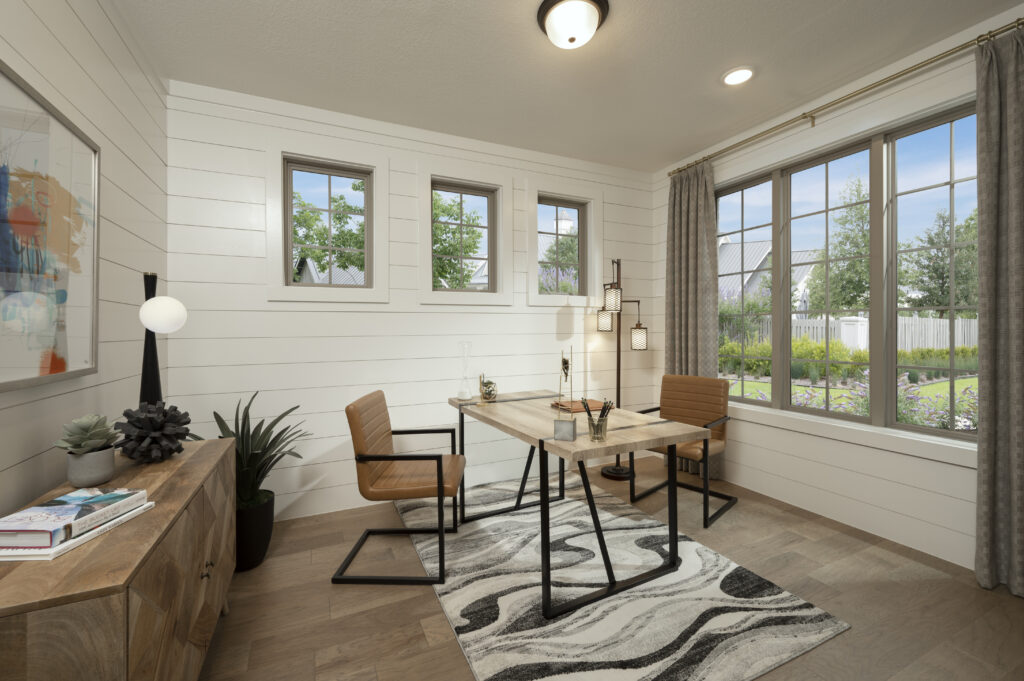
Remote work changed what people need from their homes, and floor plans are catching up. The shift is not a rejection of open-concept living — kitchens that flow into living areas are still the norm and likely always will be — but a recognition that open-concept living alone is not enough when two people are working from home, and a third is doing homework.
What buyers are looking for now is a home that can do more than one thing at once. A dedicated office that can be closed off from the rest of the house. A flex room that works as a guest room this year and a nursery or studio next year. A loft that gives teenagers or visiting family their own space without requiring a second floor plan. These are not luxury features — they are practical responses to the way households actually function today.
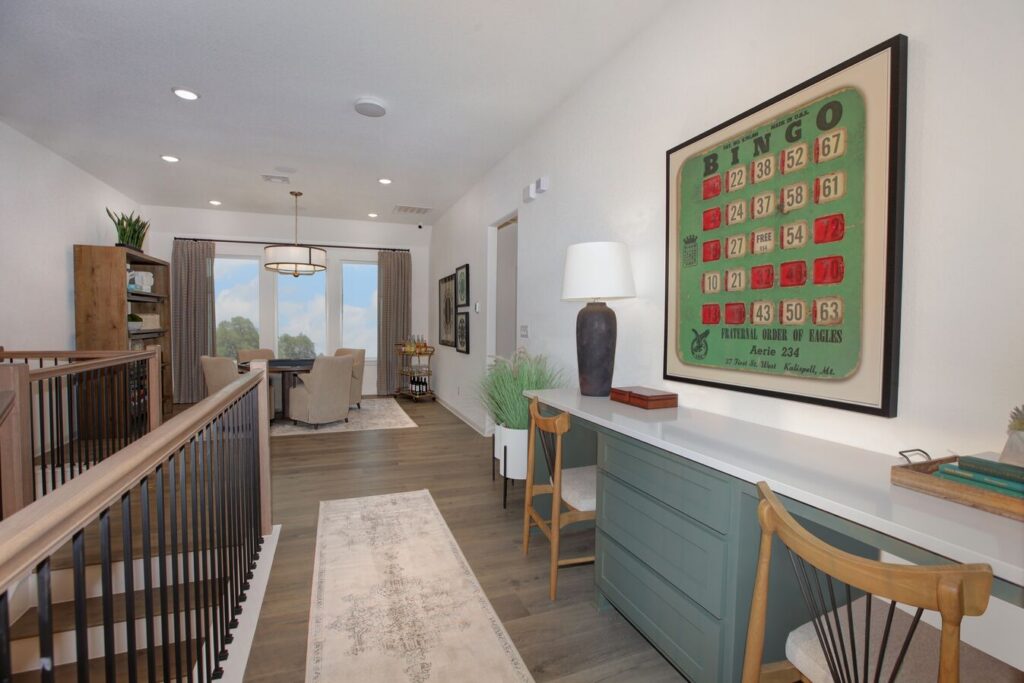
Hillwood’s builder partners have recognized this shift. Dedicated home offices, flex rooms, and lofts are common across the communities, giving families the adaptability to use their home differently as their needs change.
Outdoor Living Spaces
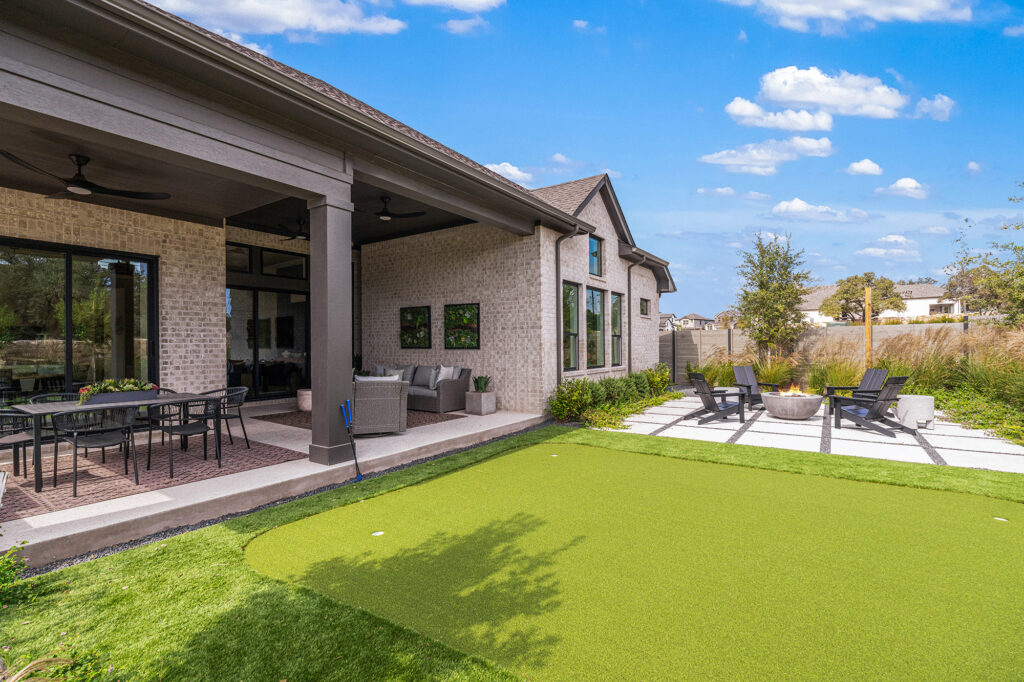
Outdoor living has moved well past patio furniture. What designers and homeowners are creating now are genuine outdoor rooms — spaces with dining areas, seating arranged around a fire table, and enough lighting and shelter to be used well beyond the summer months. The distinction between inside and outside has blurred to the point where the backyard is simply another room, designed with the same level of intention as any indoor space.
In Texas, where the climate allows for outdoor living for much of the year, this trend has particular resonance. A fire table extends the season into cooler evenings. A covered dining area makes the space usable even when the weather does not cooperate. The homes that do this well treat the outdoor area as a continuation of the interior rather than an afterthought — consistent materials, comfortable seating, and a layout that actually invites people to use it.
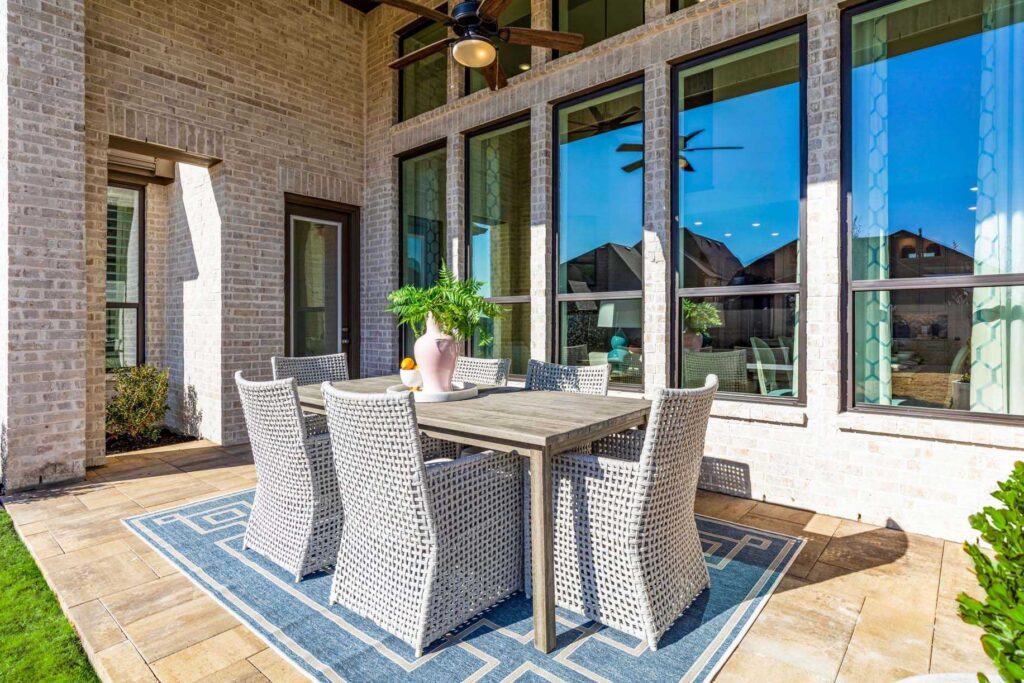
For buyers who want to maximize their outdoor space from the start, many builders in Hillwood Communities offer an enlarged outdoor living area as an optional upgrade. It is the kind of decision that is much easier to make before you move in than after.
Explore Hillwood Communities
Hillwood’s neighborhoods seek to foster a sense of community while still offering residents privacy and ways to personalize their homes. Our meticulously designed amenities give homeowners many opportunities to engage and form bonds with their neighbors. With nearly a dozen master-planned communities throughout Texas, there is a Hillwood community for everyone. Visit our communities to find your dream home!